

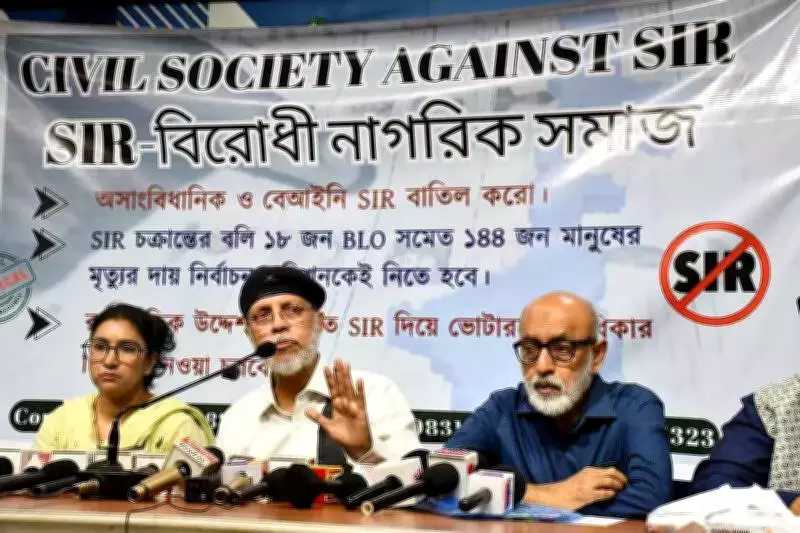
Civil Society Demands Bengal Assembly Elections Use Pre-SIR 2026 Electoral Rolls
In a significant development, civil society members from diverse backgrounds in Kolkata have issued a strong demand on Monday, calling for the upcoming West Bengal Assembly elections to be conducted based on electoral rolls prepared prior to the SIR 2026 exercise. The group, comprising citizens from various walks of life, has raised serious concerns over the ongoing SIR process, alleging it has caused widespread anxiety and hardship among voters across the state.
Allegations of Voter Exclusion and Constitutional Violations
The members of the civil society group have made a firm plea, stating that the forthcoming elections should exclusively utilize the pre-SIR electoral rolls. Specifically, they insist on using the rolls that were employed for polls up until the 2024 general elections, rather than any updated versions following SIR 2026. The group has gone so far as to demand the complete scrapping of the SIR exercise, labeling it as anti-people and anti-constitutional in nature.
Mohammad Rafay Mahmood Siddiqui, a prominent voice within the group, articulated their stance clearly: "We demand that the forthcoming elections should be held on the basis of the pre-SIR electoral rolls. The rolls that were used for polls till the 2024 general elections should be used, and not the ones after SIR 2026. We want the entire exercise to be scrapped as it is anti-people and anti-constitutional. Responsibility should be fixed for the death of 143 people, including 17 BLOs."

Concerns Over Tribal Communities and Legal Basis
The civil society group has raised alarming allegations that the SIR process is being conducted in a manner that could potentially exclude a substantial number of voters from the electoral rolls. This includes members of tribal communities, who they fear might be disproportionately affected by the exercise. Additionally, the group has questioned the legal foundation of the SIR, referencing key provisions from the Representation of the People Act, 1950, and the Registration of Electors Rules, 1960, to challenge its validity and implementation.
Impact on Women and Documentation Struggles
Highlighting the gendered impact of the SIR, the group pointed out that women are bearing the brunt of the process in particularly harsh ways. Nousheen Baba Khan, another member, explained: "Like every time, women are facing the brunt of SIR in the harshest possible way. Many have married and have had a change of address and surname. There are those who were abandoned by their husbands. They are struggling to get hold of the documents." This underscores the practical difficulties faced by women in navigating the documentation requirements, which could further exacerbate voter exclusion issues.
The civil society's demands come at a critical juncture as West Bengal prepares for its Assembly elections, with calls for electoral integrity and inclusivity taking center stage in the political discourse.






