In a significant move aimed at finding a permanent solution to the protracted water sharing conflicts, the Union Ministry of Jal Shakti (MoJS) has officially constituted a high-level committee. This panel is tasked with examining and resolving the long-standing and increasingly contentious disputes between Telangana and Andhra Pradesh over the utilisation of waters from the Krishna and Godavari rivers.
Constitution and Mandate of the New Committee
The committee's formation is a direct outcome of a decision taken during the crucial apex council meeting held in July last year. That high-level meeting was chaired by the Union Jal Shakti Minister and attended by the Chief Ministers of both Telugu states. The official notification for the committee comes at a time when public disagreements and a war of words between the two states over irrigation projects and water allocation have intensified.
The panel will be headed by the chairperson of the Central Water Commission (CWC). Its membership includes a comprehensive list of senior officials to ensure a technical and balanced approach. Members will include advisors to the water resources department (irrigation), principal secretaries and special secretaries of the irrigation departments, and engineers-in-chief from both states.

Furthermore, the committee will also include the chairpersons of the Krishna River Management Board (KRMB) and the Godavari River Management Board (GRMB), a chief engineer from the National Water Development Agency (NWDA), and a chief engineer from the CWC.
Background and Government's Stance
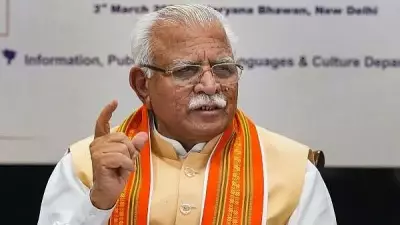
Sharing the details of this development, Union Minister G Kishan Reddy stated on Friday that the MoJS has notified the committee to resolve the inter-state river water issues. He emphasised the central government's commitment to cooperative federalism. "The government of India, following the principle of cooperative federalism, has been extending complete cooperation for the past 11 years towards resolving water related issues between the two Telugu states," Reddy said in an official statement.
The minister highlighted that the Centre has consistently provided a platform for dispute resolution. As an example, he pointed to the notification of additional terms of reference to the Krishna Water Disputes Tribunal-II (KWDT-II) on October 6, 2023. Although the tribunal's two-year timeframe was set to conclude on August 1, 2025, discussions are ongoing. Consequently, its tenure has been extended by one more year, until July 31, 2026.
Legal Framework and Path Forward
The legal basis for these interventions stems from Chapter IX, Section 84 of the Andhra Pradesh Reorganisation Act, 2014. This provision led to the constitution of the apex council, comprising the Jal Shakti Minister and the two Chief Ministers, specifically for resolving Krishna and Godavari water utilisation matters.
Following deliberations in the apex council, it was decided to form a technical committee with representatives from the Centre and both states. Both state governments were asked to nominate their representatives. After receiving the nominations from the Telangana government on December 23, 2025, the Centre proceeded with the formal notification of the committee.
The formation of this committee represents a structured, technical attempt to bring closure to a dispute that has simmered since the state's bifurcation. All eyes will now be on the panel's proceedings as it seeks to find an equitable and scientifically sound solution to the complex water sharing challenges between Andhra Pradesh and Telangana.