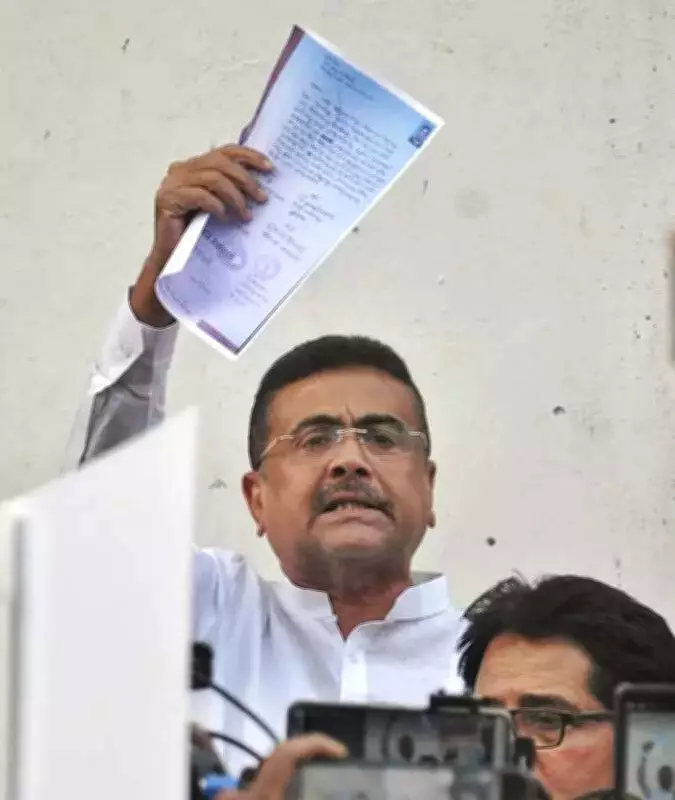
The Calcutta High Court has provided significant relief to Bharatiya Janata Party leader Suvendu Adhikari in the ongoing Chandrakona case. During a hearing on Thursday, the West Bengal state government informed the court that no coercive action would be taken against the opposition leader at this stage.
Details of the Chandrakona Incident and Legal Proceedings
In his petition to the court, Adhikari detailed the events of January 10, when his convoy was allegedly attacked in Chandrakona. The BJP leader claimed that despite the presence of police personnel at the scene, no preventive measures were implemented to protect him and his team. According to his submission, the situation escalated when miscreants attempted to set his vehicle on fire, creating a dangerous security breach.
Multiple FIRs and Cross-Complaints
Adhikari's legal counsel revealed a startling pattern of legal actions against the politician. Since his defection from the Trinamool Congress to the BJP in 2020, approximately 47-48 First Information Reports have been registered against him. In the Chandrakona incident specifically, Adhikari claimed that a "cross-FIR" was filed against him, prompting him to seek judicial intervention.

The BJP leader initially approached the single-judge bench of Justice Suvra Ghosh with his concerns. During the proceedings, the state counsel requested additional time to prepare their arguments, leading to an adjournment. The matter has been scheduled for further hearing on February 19, when both sides will present their detailed arguments.
Security Concerns and Additional Petition
In a related development stemming from the same incident, Adhikari has also moved the division bench of Chief Justice Sujoy Paul and Justice Partha Sarathi Sen. This separate petition addresses security protocols, specifically requesting that police personnel maintain a minimum distance of 200 metres from the opposition leader's convoy during movements.
This security request highlights ongoing tensions between the state administration and opposition figures in West Bengal. The BJP has repeatedly raised concerns about the safety of its leaders while operating in the state, particularly during political movements and public engagements.
Political Context and Implications
The Chandrakona case occurs against a backdrop of intense political rivalry in West Bengal. Adhikari's defection from the ruling Trinamool Congress to the BJP marked a significant shift in the state's political landscape, and his subsequent legal challenges have become emblematic of the tensions between the two major parties.
Legal experts suggest that the court's decision to grant relief and the state's assurance against coercive action represent a temporary reprieve for the BJP leader. However, the February 19 hearing will be crucial in determining the long-term trajectory of this case and its implications for political security protocols in the state.
The development also raises broader questions about the relationship between law enforcement agencies and opposition politicians in India's federal structure. As the case progresses, it will likely attract significant attention from political observers and legal analysts monitoring the intersection of politics and judicial processes in West Bengal.