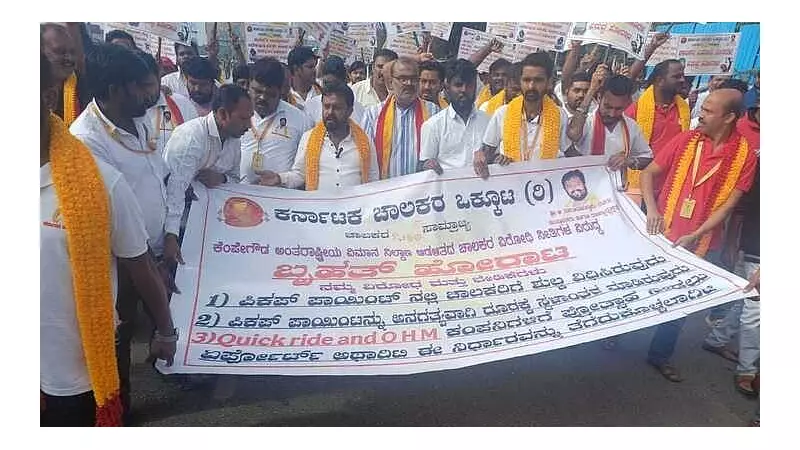
Chaos erupted on the roads leading to Kempegowda International Airport (KIA) in Bengaluru on Thursday as hundreds of cab drivers staged a massive protest, blocking the main toll plaza. The demonstration was a direct response to the airport's newly implemented pick-up rules, which have ignited fury within the taxi driver community.
What Sparked the Airport Cab Protest?
The core of the dispute lies in a new policy enforced by the Bangalore International Airport Limited (BIAL). According to the protesting drivers, the new mandate requires them to pay a fee of Rs 150 to enter the airport's designated pick-up zone. This charge is in addition to the existing toll they pay to use the airport access road.
Drivers, united under banners like the Karnataka State Taxi Drivers' Association, argue that this dual-charge system is exploitative and severely cuts into their daily earnings. They claim the rule was imposed without any prior consultation with their unions, leaving them with no choice but to take their grievance to the streets.
Traffic Standstill and Passenger Inconvenience
The protest action had an immediate and severe impact. By blocking the Sadahalli gate toll plaza on the crucial airport road, drivers brought vehicular movement to a grinding halt for several hours during the day. The blockade created a massive traffic snarl, stretching back for kilometers and causing significant inconvenience to hundreds of air passengers rushing to catch flights.
Many travelers were forced to abandon their vehicles and walk long distances with their luggage to reach the terminal buildings. The protest highlighted the fragile ecosystem of airport connectivity and how disputes can paralyze a key infrastructure node for India's tech capital.
Authorities Respond and Seek Resolution
Law enforcement agencies, including personnel from the Kempegowda International Airport police station, were swiftly deployed to manage the situation. Police officials engaged in talks with the protest leaders to clear the blockade and restore traffic flow. The primary demand from the cab unions is clear: an immediate rollback of the new pick-up fee structure.
As of now, the protest has been temporarily dispersed following police assurance that their concerns would be addressed. However, the taxi unions have warned of more intense and prolonged agitation if BIAL does not revoke the controversial rule. The airport authorities are yet to issue a detailed public statement on the rationale behind the new charge and whether any revision is being considered.
This incident underscores the ongoing tensions between airport management policies and the livelihoods of service providers. It also raises questions about the cost of airport access and who ultimately bears it—the driver or the passenger. The resolution of this conflict will be closely watched by commuters and drivers alike, as it sets a precedent for similar infrastructure-linked disputes in other Indian cities.