BMC Cracks Down on Procedural Failures in Dangerous Building Management
In a significant move, the Brihanmumbai Municipal Corporation (BMC) has raised serious concerns regarding procedural lapses in the action taken against dangerous C-1 category buildings across Mumbai. The civic body has issued a stern warning to its ward-level officials, indicating that disciplinary and legal consequences will follow for any non-compliance with the established norms and standard operating procedures.
Circular Highlights Systemic Failures
A detailed circular issued on April 2 by Additional Municipal Commissioner (City) Dr. Ashwini Joshi explicitly states that ward offices are consistently failing to adhere to the Standard Operating Procedure (SOP) mandated under earlier civic directives and Bombay High Court orders concerning dilapidated structures. This SOP, initially established through a 2016 circular following directions from a High Court petition, requires all actions against unauthorized constructions and dangerous buildings to be meticulously recorded on the Encroachment Eradication Monitoring and Management System (RETMS).
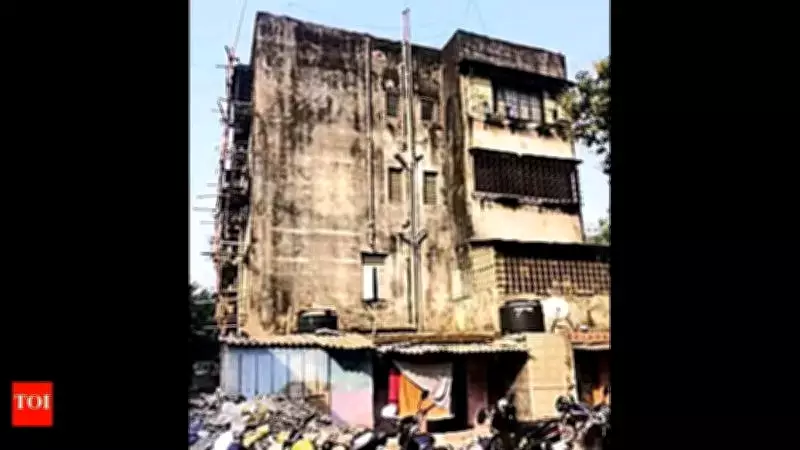
The RETMS is a centralized digital platform introduced to ensure transparency and accountability in municipal operations. Dr. Joshi emphasized that the need for this fresh circular arose following significant lapses identified in the case of a dilapidated building in Mumbai's Prabhadevi area. "Here we found that the procedure wasn't followed and hence a need was felt to issue a circular reiterating the guidelines," she told TOI, underscoring the urgency of the matter.

Irregularities in Development Control Regulations
Beyond the RETMS compliance issues, the BMC has also flagged substantial irregularities in the implementation of the Development Control and Promotion Regulations (DCPR) 2034. Particular attention was drawn to Rule 33(7)(a), which governs the redevelopment of old, dilapidated, and tenant-occupied buildings. This rule outlines the critical process for determining tenant eligibility and permissible built-up area during reconstruction or redevelopment projects.
According to the circular, officers, developers, and architects have, in several instances, failed to follow the guidelines issued in 2018 and 2020 regarding the verification of occupied areas, documentation, and certification processes. The fresh circular warns that bypassing due scrutiny while processing area certificates and related documents could result in significant financial losses to the municipal corporation.
"Processing redevelopment-related documents without following the prescribed procedure is leading to revenue implications for the corporation," the circular stated, highlighting the economic impact of these procedural failures.
Strict Compliance and Accountability Measures
In response to these identified lapses, the civic body has now directed all assistant commissioners and designated officers across wards to strictly comply with the SOPs. They must ensure that every step—from issuing notices to taking enforcement action—is duly recorded on the RETMS platform. This directive aims to restore integrity and efficiency in the management of dangerous buildings.
The BMC has made it unequivocally clear that any deviation from the rules will attract strict accountability. "Concerned officers, as well as developers and architects involved in such violations, will face appropriate disciplinary and legal action," the circular warned, signaling a zero-tolerance approach towards non-compliance.
This move by the BMC underscores a broader effort to enhance governance and public safety in Mumbai, ensuring that procedural rigor is maintained in handling the city's aging and hazardous building infrastructure.