Mumbai witnessed a significant political development as the Bharatiya Janata Party secured a strong position in the Brihanmumbai Municipal Corporation elections. An analysis of the results reveals a clear pattern in voter behavior and party strategy.
Marathi Community Shows Strong Support for BJP
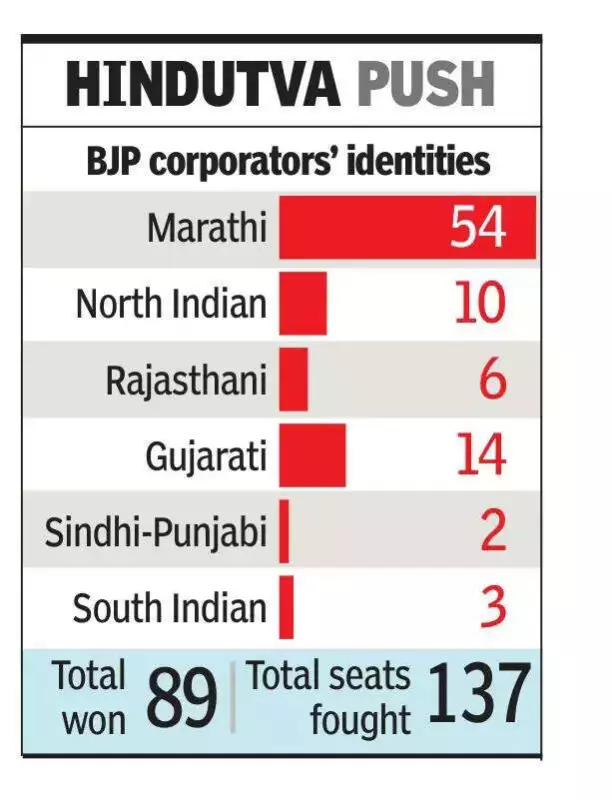
Out of eighty newly elected BJP corporators in the BMC, fifty-four individuals identify as Marathis. This figure represents more than sixty percent of the party's total elected representatives. The substantial Marathi presence indicates that community identity continues to play a crucial role in Mumbai's political landscape.
BJP officials openly acknowledged this trend. They stated that the Marathi community provided extensive backing to the party during the elections. This support emerged despite aggressive nativist campaigns conducted by opposing political groups.

Diverse Representation Across Communities
The electoral success did not rely solely on Marathi voters. Among eighty-nine corporators, fourteen have Gujarati backgrounds while ten come from north Indian communities. Additional representation includes Sindhi-Punjabi and south Indian candidates. This broad spectrum demonstrates a concerted effort to engage multiple linguistic and cultural groups.
Mumbai BJP chief Ameet Satam emphasized the inclusive nature of their campaign. He explained that the party implemented detailed community outreach programs. These initiatives specifically targeted middle-class Maharashtrians, dalit communities, and north Indian residents. The strategy aimed to expand beyond traditional support bases like Gujaratis and Marwaris.
Hindutva Strategy Proves Effective
Satam directly credited the party's focus on Hindutva principles for contributing to their electoral success. He stated that this ideological approach worked favorably for the BJP in Mumbai. The party believes it helped attract a segment of Marathi voters who might otherwise have supported rival candidates.
Political observers analyzed the election as a critical test for the Thackeray political brand. The collaboration between Shiv Sena (UBT) leader Uddhav Thackeray and MNS chief Raj Thackeray created a unified nativist front. However, analysts noted that this alliance failed to achieve its full potential impact.
Micro-Management and Community Engineering
BJP leaders detailed their meticulous preparation for the BMC polls. They described implementing sophisticated community engineering techniques. The party conducted extensive outreach across various professional and social groups.
Their campaign engaged dabbawalas, sanitation workers, boot polish professionals, and entertainment industry personalities. The BJP also connected with influencers from specific communities including Bhandari, Teli, Vanjari, Dhangar, and Mali groups. These diverse stakeholders participated in developing the party's election manifesto.
Additional voter segments received special attention from BJP functionaries. The party actively courted lawyers, educators, traders, chartered accountants, and business professionals. This comprehensive approach aimed to build a broad coalition of support across Mumbai's complex social fabric.
Strategic Leadership Appointment
Political analysts highlighted the significance of Ameet Satam's appointment as Mumbai BJP chief before the elections. As a middle-class Marathi leader, Satam provided the party with a relatable face for many local voters. His leadership helped bridge connections with communities that might have been hesitant to support the BJP previously.
The election results suggest that Mumbai residents responded positively to BJP's promises of urban security and development. Voters appeared to support the party's vision for a safer, more prosperous city. This electoral outcome demonstrates how careful community engagement combined with ideological messaging can yield political success in India's financial capital.