BJP Holds Nagpur Civic Body Despite Reduced Margin
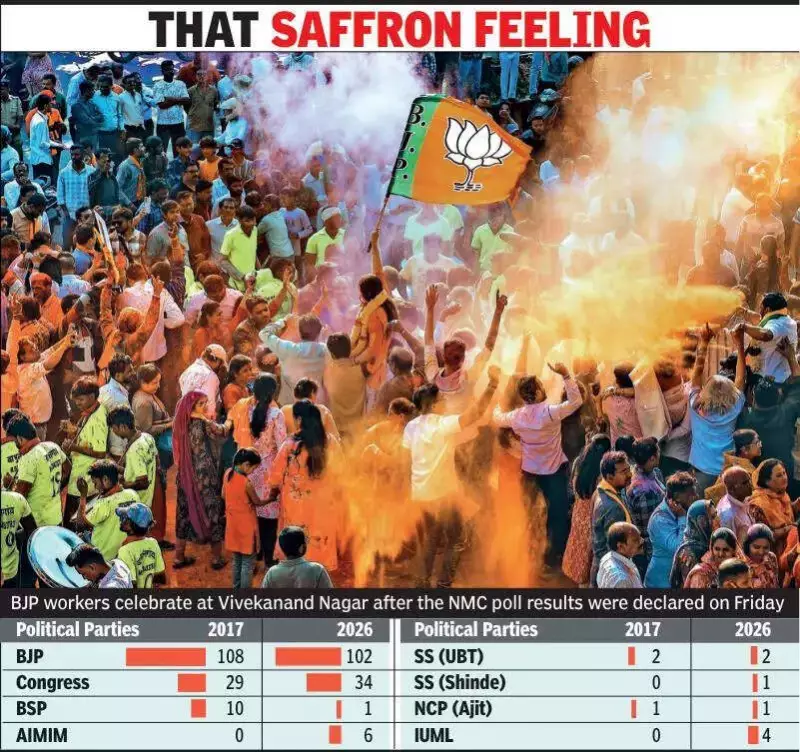
The Bharatiya Janata Party maintained its longstanding dominance in Nagpur's civic administration on Friday. The party crossed the crucial 100-seat threshold in the Nagpur Municipal Corporation elections, securing its position as the ruling party.
Mixed Results for Major Parties
While the BJP achieved victory, the party fell short of its internal target of 120 seats. It also performed below its 2017 showing when it captured 108 seats. This indicates some erosion of support despite the overall win.
The Congress party demonstrated improvement in these elections. It increased its tally from 20 seats in 2017 to 34 seats this time, marking a significant gain for the opposition party.

New Entrants and Party Performances
A notable development emerged with the All India Majlis-e-Ittehadul Muslimeen making its debut in Nagpur civic politics. The party secured six seats in its first attempt. The Indian Union Muslim League also won four seats.
Other political formations experienced varied outcomes:
- The Nationalist Congress Party (Ajit Pawar faction) contested 83 seats but managed only one victory through candidate Abha Pande
- Shiv Sena (Shinde faction) secured a single seat
- Shiv Sena (UBT) maintained its previous count of two seats
- The Bahujan Samaj Party, which held ten seats in 2017 making it the third largest party then, won just one seat this time
Voter Turnout Declines Despite Infrastructure Improvements
Nagpur recorded a voter participation rate of 51.38 percent in these civic elections. This represents a noticeable drop from the 53.72 percent turnout recorded in 2017.
The reduced participation occurred despite significant infrastructure enhancements. Election authorities added nearly 1,600 polling booths across the city since the 2024 assembly elections. The voter list expanded by approximately four lakh voters, theoretically making voting more accessible.
Several factors contributed to the lower turnout. Technical glitches affected polling stations during morning hours. Voter list discrepancies created confusion at some locations. These issues particularly impacted mid-sized prabhags where the BJP traditionally relies on strong mobilization efforts.
The election results reflect both continuity and change in Nagpur's political landscape. While the BJP maintains control, shifting voter patterns and new political entrants suggest evolving dynamics in Maharashtra's important urban center.