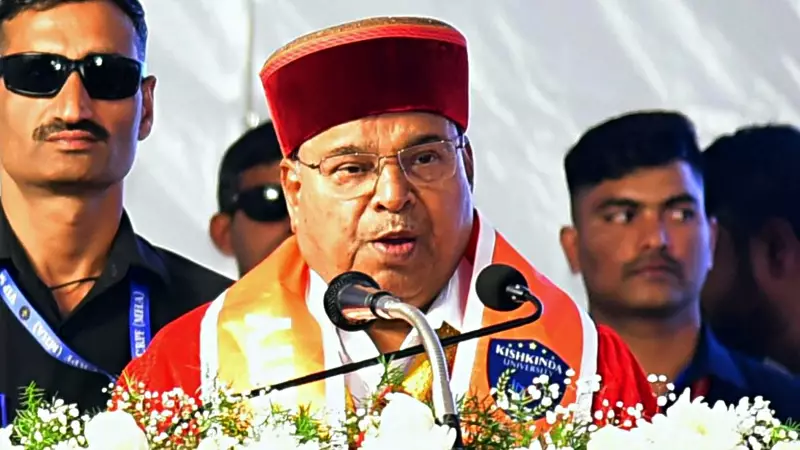
The Bharatiya Janata Party (BJP) in Karnataka has formally appealed to Governor Thaawarchand Gehlot, urging him to either withhold his assent to a contentious new legislation or reserve it for the consideration of the President of India. The party submitted a detailed representation on Monday, January 12, 2026, targeting the recently passed Karnataka Hate Speech and Hate Crime (Prevention) Bill, 2025.
Opposition to the Hate Speech Legislation
The core of the BJP's petition revolves around the state government's proposed law to curb hate speech and hate crimes. The opposition party has raised strong objections, labeling the bill as a tool for suppression. According to the BJP, the legislation fails to align with established judicial precedents and international constitutional standards.
Leader of the Opposition, R Ashoka, voiced these concerns publicly. He argued that the bill, if enacted, could empower the police to act on government instructions against anyone, effectively "snatching away freedom of speech." The BJP's representation emphasized that existing laws already address the issue of hate speech comprehensively, making the new bill appear redundant and politically motivated.
The petition explicitly requests the Governor to either reject the bill in its current form or reserve it for the President's consideration, citing a potential disturbance of the federal balance between the state and the centre.
Demand for Central Agency Probes
Alongside the petition on the hate speech bill, the BJP submitted separate memorandums to the Governor seeking investigations by the Central Bureau of Investigation (CBI) into two other sensitive matters.
The first demand is for a CBI probe into the violent clash in Ballari on January 1, which resulted in the death of a Congress worker. The BJP expressed "absolutely no confidence" in a fair investigation by the local police or the state government. The party accused the ruling Congress government of being predetermined to protect the culprits, specifically pointing fingers at local MLA Nara Bharath Reddy in connection with the incident.
The second memorandum concerns the government's decision to sanction houses for individuals evicted from Kogilu Layout in Bengaluru. The BJP alleged that some of the demolished dwellings belonged to suspected illegal Bangladeshi immigrants. Citing its own fact-finding report, the party urged the Governor to direct the government to desist from this policy, arguing it encourages illegal encroachment while thousands of legitimate housing applications remain pending.
Political Implications and Next Steps
Governor Thaawarchand Gehlot, who has already cleared 18 out of 22 bills from the recent winter session, is yet to decide on the Hate Speech Bill. The legislation has drawn criticism not only from the BJP but also from various civil rights groups, setting the stage for a significant constitutional and political decision.
The BJP's twin strategy of challenging a potentially impactful state law while pushing for central agency intervention in alleged state failures highlights the ongoing political friction in Karnataka. The party's actions frame the state government's moves as attempts to suppress dissent and shield its own members, setting a narrative for future electoral battles. The Governor's response to these petitions will be closely watched, as it will have substantial implications for state-centre relations and the legal landscape surrounding free speech in Karnataka.