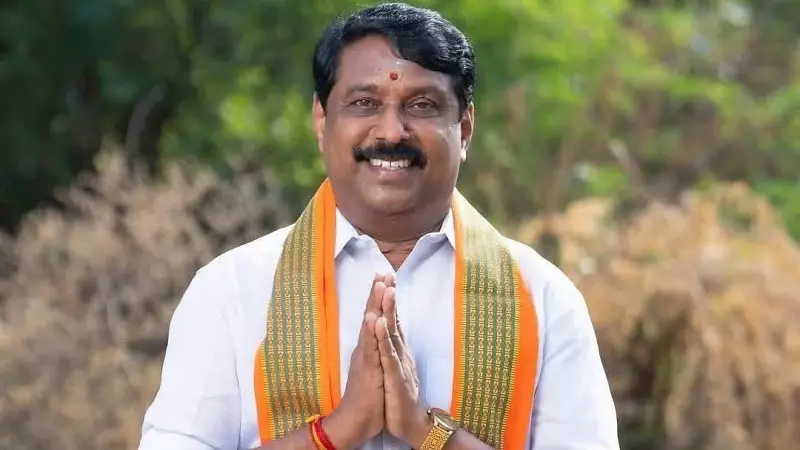
The political temperature in Tamil Nadu has risen sharply following serious allegations made by the state president of the Bharatiya Janata Party (BJP) against the ruling Dravida Munnetra Kazhagam (DMK) government. The BJP leader has claimed that the DMK administration is more focused on confronting the Central government than on implementing schemes for the welfare of the people.
Allegations of Blocking Educational Opportunities
At the heart of the controversy is a significant educational initiative. The BJP Tamil Nadu chief has asserted that the state government actively prevented the establishment of Jawahar Navodaya Vidyalaya (JNV) schools across Tamil Nadu. These schools, which are central government-run residential institutions aimed at providing quality education to talented children predominantly from rural areas, have been a point of contention.
The opposition leader claims that the DMK government raised the language issue as a primary reason for its opposition, adopting a stance that has been perceived as hostile towards policies initiated by the central government. This move, according to the BJP, has deprived students in Tamil Nadu of access to a well-regarded national educational platform.
The Core of the Political Confrontation
The accusations were formally presented on 17 December 2025. The BJP's central charge is that the state's leadership is engaging in political posturing at the expense of tangible development. Instead of facilitating cooperative federalism and allowing central schemes to benefit the local population, the DMK is allegedly choosing confrontation.
This narrative frames the current DMK government as an administration more interested in linguistic and political disputes than in securing resources and opportunities for its citizens. The BJP state chief's statement is a direct challenge to the ruling party's commitment to public welfare, suggesting a gap between its political rhetoric and actionable governance.
Implications for Centre-State Relations
This incident is not an isolated one but reflects the ongoing, often tense, dynamics between the DMK-led state government and the BJP-led central government. The blocking of the Navodaya Vidyalaya scheme is portrayed as a symbolic example of this larger conflict.
The political fallout from these allegations could influence public perception, especially among sections concerned with education and employment opportunities for the youth. It positions the BJP as a party highlighting the state government's alleged failures, while the DMK is likely to defend its actions as protecting Tamil Nadu's linguistic and cultural autonomy from central overreach.
As the news broke, the political discourse in the state has intensified, with both sides preparing to defend their positions. The coming days may see further clarifications, counter-accusations, and a deepening of the debate over who truly acts in the interest of the people of Tamil Nadu.