A provocative social media post from a Bharatiya Janata Party (BJP) legislator in Uttar Pradesh has ignited a fresh debate on caste politics and exposed potential fault lines within the state's ruling party. The incident underscores the delicate balancing act the BJP must perform as it navigates complex social equations ahead of crucial by-elections.
The Tweet That Stirred the Pot
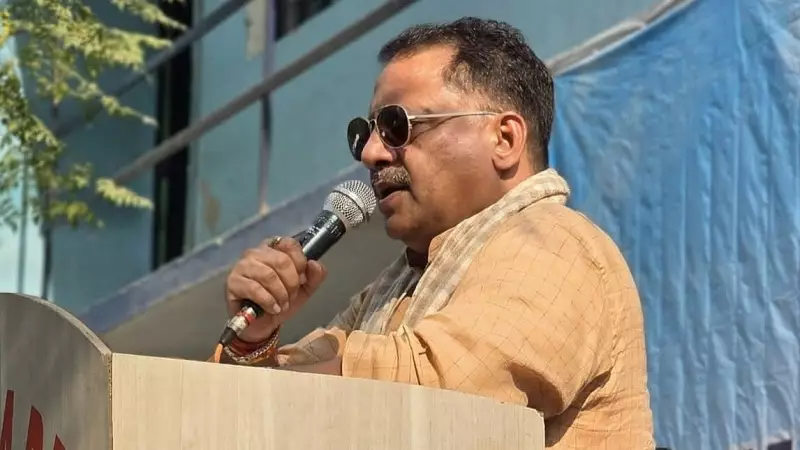
The controversy erupted when BJP MLA from Bairia, Ravindra Pratap Singh, took to X (formerly Twitter) to issue a pointed message. In his post, Singh wrote, "Brahmins unite the society and not divide it." While seemingly innocuous, the statement was widely interpreted as a subtle critique of recent political rhetoric perceived to be targeting the Brahmin community.
This message, shared on July 12, did not emerge in a vacuum. It came against a tense political backdrop where caste identities are being actively mobilized. The timing is particularly sensitive with bypolls looming for 10 assembly seats in Uttar Pradesh, including the high-stakes Lucknow East constituency. Singh's direct appeal to Brahmins, a traditionally influential voter base, signals a clear attempt to address perceived anxieties within the community.

Context and Political Repercussions
The MLA's tweet is seen as a reaction to statements made by other political figures, including some from within the broader Sangh Parivar. Notably, comments from leaders like Rashtriya Swayamsevak Sangh (RSS) ideologue Indresh Kumar and Samajwadi Party (SP) leader Swami Prasad Maurya have recently brought caste discourse to the forefront. Maurya's remarks on the Manusmriti, an ancient legal text, and Kumar's emphasis on social harmony have created a charged atmosphere.
Political analysts suggest Singh's post reveals an internal rift or at least a difference in strategy within the Uttar Pradesh BJP. One faction appears focused on consolidating non-dominant caste groups (often referred to as Pichda, Ati Pichda, Alpsankhyak, or PAAP), while another is keen on reassuring the Brahmin community, which has been a core support group. The tweet from a sitting MLA suggests that some within the party believe the latter group feels neglected or targeted.
The BJP's official response has been to downplay any division. Party leaders have stated that Singh's views are personal and that the BJP works for the welfare of all communities without discrimination. However, the fact that the tweet remains public and has not been retracted speaks volumes about the underlying tensions.
Broader Implications for Uttar Pradesh Politics
This episode highlights the enduring complexity of caste calculus in Uttar Pradesh, India's most populous and politically pivotal state. The BJP's success in recent years has been built on a broad social coalition. Any perception of alienation within a key segment like Brahmins could have significant electoral consequences.
The upcoming bypolls, especially in Lucknow East—a seat previously held by a Brahmin leader, former minister Ashutosh Tandon—will be a critical test. The opposition, particularly the Samajwadi Party and the Congress, is likely to seize upon this apparent discord to challenge the BJP's unified image. The incident forces the BJP leadership to carefully manage its messaging to prevent the consolidation of one caste group at the expense of another.
Ultimately, Ravindra Pratap Singh's tweet is more than a social media post; it is a symptom of the larger challenges of social engineering in Indian politics. It demonstrates how internal party communications can publicly expose strategic dilemmas. As Uttar Pradesh gears up for another electoral battle, the BJP's ability to placate all sides of this equation will be closely watched, determining not just bypoll outcomes but also the stability of its core voter base in the long run.