A major controversy erupted in the Odisha Legislative Assembly on Thursday after a Bharatiya Janata Party (BJP) legislator made contentious statements concerning Mahatma Gandhi. The incident led to a strong reaction from the opposition, resulting in a silent protest and a temporary disruption of the house proceedings.
What Did the BJP MLA Say?
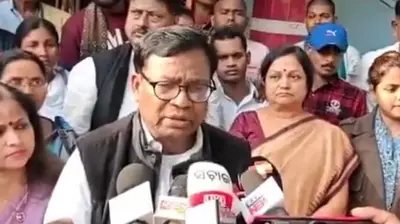
The controversy was triggered by remarks made by BJP MLA Santosh Khatua, who represents the Nilgiri constituency. Khatua made the statements while participating in a debate on the supplementary budget. Although the exact nature of his comments was not officially reported, they were deemed controversial enough to provoke immediate action from the Speaker's chair.
Speaker Surama Padhi swiftly intervened, ordering the remarks to be expunged from the official records of the Assembly. She also barred the media from reporting the specific comments made by the MLA, a move intended to contain the fallout.
Opposition Reaction and Silent Protest
Despite the Speaker's intervention, the opposition MLAs from the Biju Janata Dal (BJD) and the Congress party expressed sharp disapproval. They demanded an immediate and unconditional apology from Santosh Khatua for his statements concerning the Father of the Nation.
When their demand was not met, the opposition members attempted to disrupt the ongoing proceedings of the Assembly. Subsequently, they staged a symbolic and "silent" protest. The protesting MLAs walked up to the statue of Mahatma Gandhi located inside the Assembly premises to register their strong objection to the BJP legislator's words.
Immediate Aftermath and Broader Implications
The incident highlights the continued sensitivity surrounding the legacy of Mahatma Gandhi in Indian political discourse. It also underscores the tense atmosphere that can quickly develop in legislative houses over remarks deemed disrespectful to national icons.
The swift expunging of the remarks by the Speaker prevented the specific comments from entering the public domain through official channels, but the political reaction was immediate and visible. The protest at Gandhi's statue served as a powerful visual symbol of the opposition's stance, turning the Assembly premises into a site of political demonstration.
This event adds to a series of recent disruptions and controversies in various state assemblies and the Parliament, reflecting the deeply polarized nature of contemporary Indian politics. The focus now shifts to whether the issue will be pursued further by the opposition parties outside the house or if it will subside following the day's protests.