Internal Discord Erupts Within BJP Tamil Nadu Unit Ahead of Crucial Seat-Sharing Negotiations
Significant differences have emerged publicly within the Bharatiya Janata Party's Tamil Nadu unit as the party prepares for critical seat-sharing discussions ahead of the upcoming state assembly elections. The internal tensions surfaced after senior leaders engaged in a war of words, prompting varied reactions from party cadres across the southern state.
Khushbu Sundar Challenges Narrative of Annamalai's Sole Contribution
In a recent interview with a Tamil journal, BJP state vice-president Khushbu Sundar addressed questions about party growth in Tamil Nadu, explicitly stating that the BJP's increasing presence cannot be attributed solely to the "mass appeal" of former state president K Annamalai. Sundar emphasized that electoral victories depend on collective effort rather than individual popularity.
"Whether an individual leader wins or loses is not important — the party's victory is what matters," Sundar declared during the interview. While acknowledging Annamalai's skills as a former IPS officer and effective communicator who successfully conveys the party's message to the public, she rejected the framing of BJP's progress as "before Annamalai" and "after Annamalai."
Sundar highlighted the foundational work done by earlier leaders including L Ganesan, Tamilisai Soundararajan, and Pon Radhakrishnan, who persevered during challenging periods when the party sometimes received fewer votes than NOTA (None of the Above) options in elections. "If one wants to speak of phases, it would be more appropriate to say before Tamilisai Soundararajan and after Tamilisai Soundararajan," she suggested, referencing Soundararajan's tenure as state BJP president.
Annamalai Advocates for Continuous Party Evolution
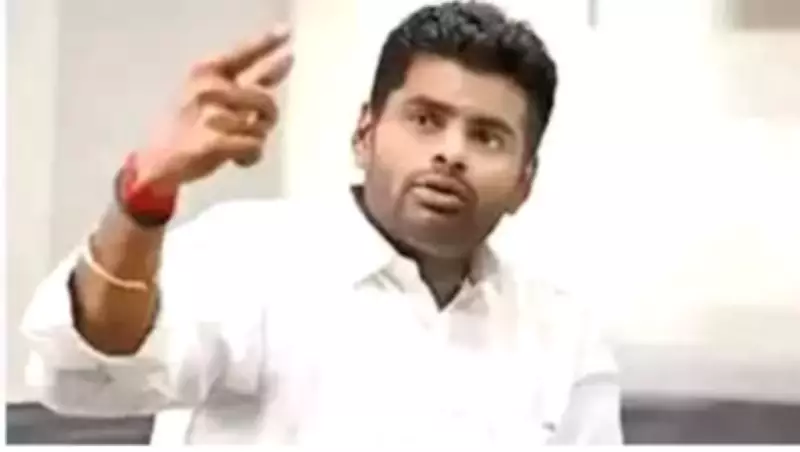
Responding to Sundar's remarks, K Annamalai acknowledged that differing perspectives are natural in political environments but stressed the importance of continuous organizational growth. "A political party should not remain stagnant like stagnant water," Annamalai stated, advocating for dynamic development within the BJP's Tamil Nadu structure.
He elaborated further, noting that "If the same name from 1980 continues to define a party as 'before and after,' it would mean the party did not grow." Annamalai emphasized the necessity for the BJP to steadily expand its support base across Tamil Nadu, adding that "One day the party will come to power, and for that we need committed leaders."
Additional Internal Criticism Emerges Within State Leadership
In a separate development highlighting further internal discord, BJP state vice-president K P Ramalingam, who serves as election in-charge for western Tamil Nadu, directed criticism toward state president Nainar Nagenthran. Ramalingam suggested that the party leadership must prioritize organizational strengthening and groundwork as preparations intensify for the 2026 assembly elections.
The timing of these public disagreements is particularly significant as the BJP navigates complex alliance negotiations and seat-sharing arrangements with potential partners in Tamil Nadu. Political observers note that such internal debates, while reflecting democratic processes within the party, could potentially impact unity during crucial electoral preparations.
The exchanges between senior leaders have triggered varied reactions among BJP cadres across Tamil Nadu, with some expressing concern about public airing of differences while others view the discussions as healthy democratic expression within the party structure. As the political landscape heats up ahead of assembly elections, how the BJP manages these internal dynamics while presenting a unified front to voters remains a critical question for the party's prospects in Tamil Nadu.