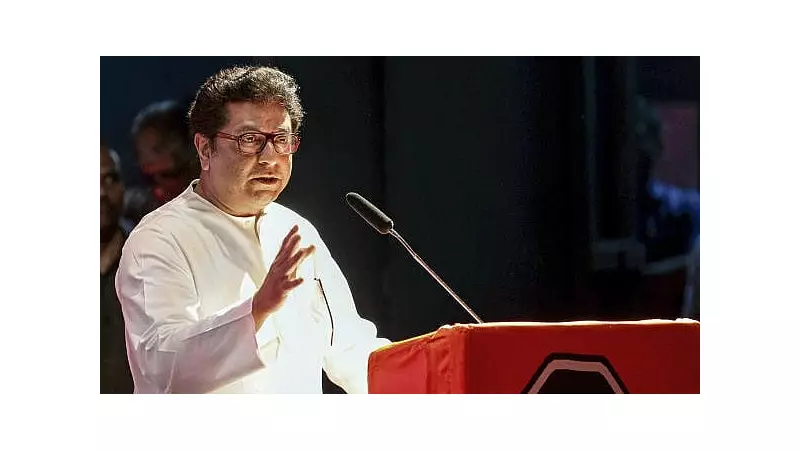
The political atmosphere in Maharashtra heated up on Wednesday as the state's Bharatiya Janata Party (BJP) unit launched a sharp counterattack against Maharashtra Navnirman Sena (MNS) chief Raj Thackeray. The backlash came in response to Thackeray's recent controversial statement, which the BJP has labeled as a blatant insult to the people of South India.
The Spark: Thackeray's Controversial Commentary
The controversy erupted following remarks made by Raj Thackeray during a public address. While the exact context of his statement from the Deccan Herald report involves a political critique, the BJP zeroed in on a particular phrase they found deeply offensive. The party accused the MNS leader of using derogatory language that maligned the cultural and social fabric of South Indian communities residing in Maharashtra.
The BJP's reaction was swift and severe. Senior leaders from the party's Maharashtra wing held a press conference to publicly denounce Thackeray's words. They framed his comment not just as a political misstep, but as a deliberate attempt to create regional divisions and foster hatred among the diverse populations that call Maharashtra home.
BJP's Furious Retort and Accusations
Leading the charge for the BJP was state party president Chandrashekhar Bawankule. In a strongly-worded rebuttal, Bawankule condemned Thackeray's language, asserting that it crossed all lines of civil political discourse. The BJP's core argument hinged on the principle of national unity.
The party emphasized that India's strength lies in its diversity, and any comment that belittles people from one particular region is an attack on the nation's integrity itself. They pointed out that millions of South Indians have contributed immensely to Maharashtra's development, particularly in cities like Mumbai, Pune, and Nagpur, and deserve respect, not scorn.
Furthermore, the BJP turned the tables on Thackeray by questioning the intent behind his remark. They suggested it was a calculated move to divert public attention from more pressing governance issues and to stir up regional sentiments for narrow political gains. This, the BJP claimed, exposed the MNS's bankrupt political agenda.
Political Repercussions and the Bigger Picture
This war of words is not happening in a vacuum. It unfolds against the complex backdrop of Maharashtra's volatile politics, where alliances are fluid and regional identity is a potent electoral tool. The MNS, historically, has built its platform on a strong Marathi sub-nationalist ideology, which has sometimes led to friction with communities from other states.
By taking a firm stand, the BJP is positioning itself as a pan-Indian party that safeguards the interests and dignity of all Indians, regardless of their linguistic or regional background. This aligns with their national narrative of 'Sabka Saath, Sabka Vikas' (Together with all, Development for all). The confrontation also potentially strains any behind-the-scenes equations between the BJP and factions of the broader Shiv Sena family, to which the MNS belongs.
The incident raises critical questions about the nature of political rhetoric in India. It highlights the fine line between advocating for local interests and resorting to divisive language that can alienate and hurt communities. As the news spreads, reactions from South Indian groups and leaders within Maharashtra are keenly awaited, which could amplify the issue further.
In conclusion, Raj Thackeray's remark has successfully ignited a fresh political firestorm. The BJP's aggressive condemnation ensures the issue remains in the headlines, framing the MNS chief as a divisive figure while bolstering the BJP's image as a unifying force. The episode serves as a reminder of how sensitive regional and linguistic identities remain in Indian politics, and how quickly a single comment can escalate into a major controversy with state-wide and even national resonance.