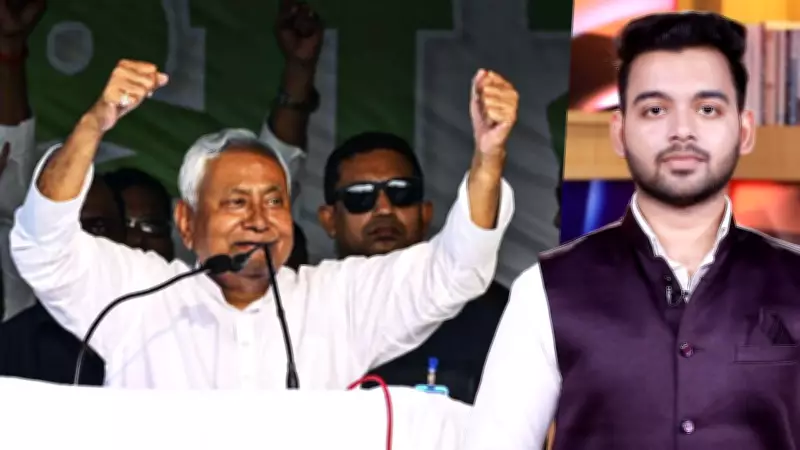
Bihar Political Landscape in Flux as Nitish Kumar Prepares for Rajya Sabha Move
Bihar politics has reached a critical juncture with Chief Minister Nitish Kumar set to transition to the Rajya Sabha, effectively concluding his extensive tenure as the state's chief executive. This significant development has plunged the Janata Dal (United) into a state of uncertainty, raising profound questions about the party's future leadership and its strategic role in the forthcoming government formation.
BJP Poised to Claim Chief Minister Post in Power-Sharing Formula
According to reliable political sources, the Bharatiya Janata Party is positioned to assert its claim on the chief minister's position, while the JD(U) is expected to secure the deputy chief minister role. This potential arrangement reflects ongoing negotiations between the alliance partners as they navigate the post-Nitish Kumar political era in Bihar.
Key contenders for the deputy chief minister position include Vijay Kumar Chaudhary, a longstanding and trusted ally of Nitish Kumar, along with Nitish Kumar's son, Nishant Kumar. The inclusion of these names in discussions highlights the complex dynamics at play within the JD(U) as the party seeks to maintain its political relevance while accommodating generational transitions.
Comprehensive Cabinet Formation Discussions Underway
Parallel discussions are actively progressing regarding the formation of the new state cabinet. Both the BJP and JD(U) are anticipated to receive substantial ministerial berths, reflecting their dominant positions within the ruling coalition. Meanwhile, smaller alliance partners including the Lok Janshakti Party (Ram Vilas), Hindustani Awam Morcha (Secular), and Rashtriya Lok Morcha are likely to retain their existing positions within the government structure.
Political analysts observing the situation suggest that the selection of the next chief minister could involve unexpected choices, maintaining Bihar's political landscape in a state of considerable flux. The decisions finalized in the coming days within Patna's political circles will not only determine who assumes leadership of the state but will also establish the precise power-sharing formula between JD(U), BJP, and their various alliance partners.
Broader Implications for Bihar's Political Future
The transition marks a pivotal moment in Bihar's political history, potentially reshaping alliances and power dynamics that have remained relatively stable during Nitish Kumar's lengthy administration. The outcome of these negotiations will have far-reaching consequences for governance, policy implementation, and electoral strategies leading into future state and national elections.
As stakeholders engage in intense deliberations, the political atmosphere in Bihar remains charged with anticipation. The resolution of these leadership questions will establish new precedents for coalition politics in the state while testing the resilience of existing political partnerships forged during Nitish Kumar's tenure.