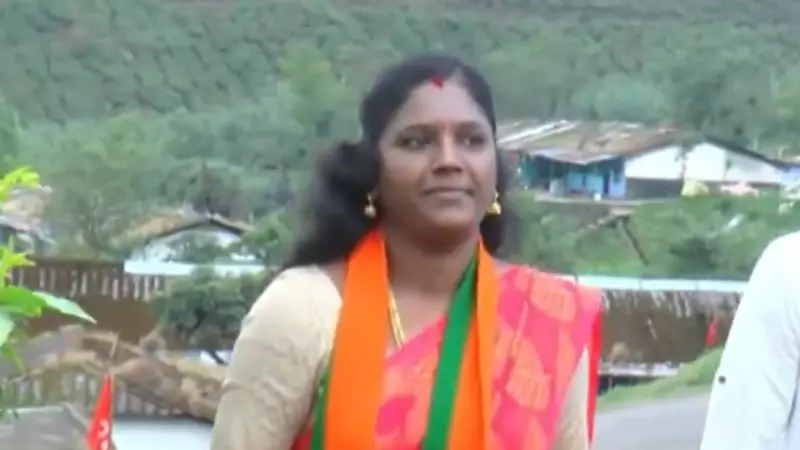
In a move brimming with political irony, the Bharatiya Janata Party (BJP) has nominated a candidate named Sonia Gandhi for the upcoming local body elections in Kerala, placing the Congress-led United Democratic Front (UDF) in a uniquely uncomfortable position. The candidate is contesting from ward 16 of the Munnar gram panchayat, setting the stage for a contest that is as much about names as it is about votes.
The Story Behind the Name
The BJP's Sonia Gandhi from Munnar was named after the senior Congress leader by her father, the late Durai Raj. He was a plantation worker, a devoted Congressman, and a local office-bearer from Kallar. For decades, she was known locally as "Durai Raj’s daughter," a testament to her family's deep-rooted association with the Congress party. The political landscape took a dramatic turn when she married Subhash, who serves as the BJP panchayat general secretary. Now, decades after her birth, the namesake of the Congress matriarch is contesting on a BJP ticket, creating ripples through the political fabric of the region.
A Psychological Campaign Challenge
The official Congress nominee, Manjula Ramesh, now finds herself pitted against a candidate sharing her top leader's name. This similarity presents a significant psychological campaign challenge for Congress workers. On one hand, Sonia Gandhi, the BJP candidate, could potentially draw sympathy votes from traditional Congress supporters who are familiar with her family's legacy and her father's dedication to the party. On the other hand, Congress campaigners must tread a very fine line. Criticising their opponent too strongly risks the perception of attacking a name that is deeply associated with their own top national leadership. This delicate situation has sparked animated discussions both offline and online, dominating the local political discourse.

Impact and Electoral Calculus
Whether the shared name will translate into actual votes or simply cause confusion among the electorate will only be known after the counting day. However, the contest has already achieved objectives that dummy candidates typically aim for: it has grabbed significant public attention, unsettled the political opponents, and successfully rewritten the local political narrative. This time, the narrative comes with a potent twist of irony. The scenario underscores how personal histories and symbolic identities can be leveraged in the complex game of electoral politics, forcing established parties to recalibrate their strategies in unexpected ways.
The battle in Munnar's ward 16 is no longer just a local panchayat election; it has transformed into a fascinating case study of political symbolism, legacy, and tactical nomination, with the potential to influence voter sentiment in unpredictable manners.