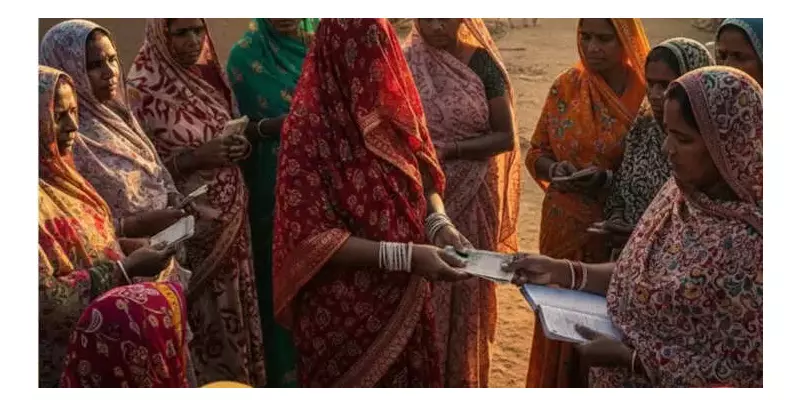
Officials in Bihar are encountering fierce resistance from villagers in Darbhanga district as they attempt to recover money mistakenly transferred to male beneficiaries under a government scheme meant exclusively for women. The controversy has sparked allegations of a political quid pro quo, with villagers linking the financial assistance to their votes in the recent assembly elections.
The Mistaken Transfer and Recovery Drive
The issue stems from the Mukhyamantri Mahila Rojgar Yojana, a scheme launched by Prime Minister Narendra Modi on September 26 this year, just ahead of the Bihar polls. Under this initiative, an amount of Rs 10,000 was to be transferred to the bank accounts of approximately 1.40 crore women entrepreneurs across the state.
However, due to what officials term a "technical problem," the funds were also credited to the accounts of some male villagers in the Jale block of Darbhanga. Following the discovery of the error, officials from Jeevika – the state government's poverty alleviation initiative overseeing the scheme – issued recovery notices to the unintended beneficiaries.

A Jeevika official from Darbhanga confirmed that notices had been sent to 14 male villagers in the Ahiyari village area. While seven villagers have reportedly returned the money, a significant number are defiantly refusing to comply.
Villagers' Anger and Allegations of Political Bargain
The recovery effort has met with strong opposition, with villagers framing the money as compensation for their political support. Their central refrain has been, "First return our votes." They argue that the timing of the notice, arriving months after the transfer and following the NDA's return to power, is suspicious.
Nagendra Ram, a physically disabled farm labourer and father of five, received one such notice. He claims he never applied for the funds and believed the money was legitimate financial assistance. "If the govt says the money was credited to our account by mistake, why didn't it send the notice immediately and why has it come after some three months?" he questioned. Ram spent the amount on clothes and household essentials during Diwali and Chhath festivities.
He directly linked the recovery to the election outcome, alleging, "Our votes led to NDA victory, but once in power, the govt is exerting pressure on us to recover the money." Echoing the sentiment of a settled account, he stated, "We gave votes. The accounts are settled." He firmly declared an inability to repay the sum.
Stories of Hardship and Defiance
Another villager, Baliram Sahani, who is also physically disabled, shared a similar plight. A landless construction labourer earning about Rs 300 per day, Sahani used the Rs 10,000 to purchase ducks and two she-goats to support his family of seven, including five children. He too connected the money to his vote for the NDA during Diwali. "Now when it has won elections, it is asking for money," he alleged, expressing helplessness about repaying the amount after two-and-a-half months.
The anger is not confined to male recipients. Women in the village have expressed even stronger resentment against the recovery move. Pramila Devi summarised the collective frustration, stating, "If govt wants our money back, it should return our votes too."
Official Stand and Lingering Questions
Jeevika officials maintain that the transfer was an error. A female official involved stated plainly, "The money got transferred by mistake," confirming the ongoing recovery process. However, the delay in issuing notices and the highly charged political context of the scheme's launch have fueled a crisis of trust.
The situation highlights the challenges in implementing welfare schemes and the profound impact of timing when errors occur around elections. The villagers' steadfast refusal, rooted in economic hardship and a perception of a broken promise, has created a standoff that goes beyond a simple clerical correction, touching upon raw nerves of political accountability and social welfare.