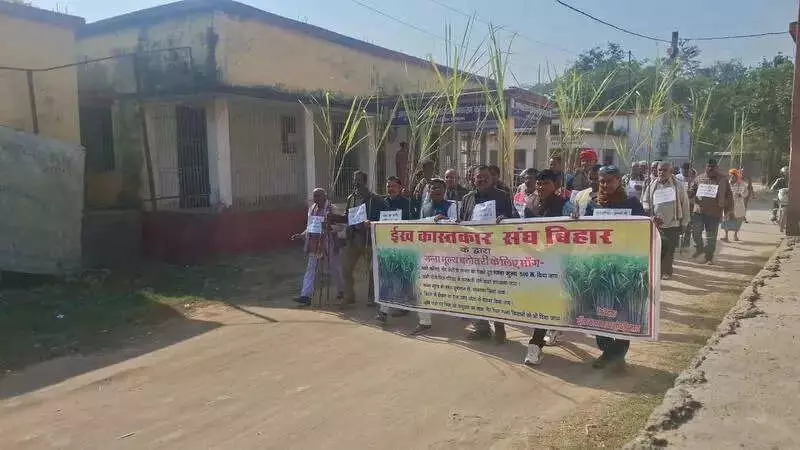
Sugarcane cultivators in West Champaran district of Bihar took to the streets on Saturday, staging a determined protest march to renew their long-standing demand for a substantial increase in the minimum support price (MSP) for their crop. The farmers, primarily from the Bagaha area, expressed deep frustration over what they term unsustainable cultivation due to low prices and soaring costs.
March to Authority and Key Demands
Carrying sugarcane stalks in their hands as symbols of their livelihood, the protesters marched to the Bagaha subdivision office. There, they formally submitted a memorandum outlining their grievances to the sub-divisional officer. The farmers have declared their intention to escalate these demands to the level of the Chief Minister and senior officials of the state's sugarcane department if their concerns are not addressed promptly.
Ramkumar Srivastava, also known as Chhote Srivastava, who serves as the secretary of the sugarcane farmers' association, detailed their core demands. The primary demand is an increase in the sugarcane price to Rs 500 per quintal. Other crucial points include expedited procurement of paddy, a reduction in diesel prices, and the installation of government-operated weighbridges on mill premises to ensure transparent and fair weighing practices.

The Root of Discontent: Price Gap and Rising Costs
Srivastava highlighted a significant point of contention: the price disparity with neighbouring states. He stated that Bihar's current sugarcane price remains markedly lower than that of Uttar Pradesh, where farmers reportedly receive up to Rs 400 per quintal. For the 2025-26 sugar season, the Fair and Remunerative Price (FRP) for sugarcane in Bihar has been set at Rs 355 per quintal, creating a wide gap between the official rate and the farmers' demand of Rs 500.
Compounding the problem of low MSP are the relentlessly rising input costs. The farmers pointed to increased expenses for essential items like diesel, fertilisers, pesticides, and electricity, which have collectively rendered the current sugarcane rate economically unviable. Members of the Bihar Ikh Kashatkar Sangh asserted that this combination of low returns and high costs has pushed cultivation to the brink of unsustainability.
Threat of Intensified Agitation
The protest in Bagaha is not an isolated event but part of a renewed wave of agitation. The farmers have made it clear that they are prepared to intensify their movement in a phased manner if the government fails to respond positively to their demands. This unrest persists even though the local Bagaha sugar mill has commenced its crushing operations for the current season, indicating that the issue is fundamentally linked to pricing policy rather than procurement delays.
The simmering discontent among Bihar's sugarcane farmers underscores a larger crisis in agricultural sustainability. The protest in West Champaran serves as a stark reminder of the growing economic pressures on farmers and the urgent need for policy intervention to ensure fair remuneration for their produce.