Bihar Government Announces Portfolio Distribution After Leadership Change
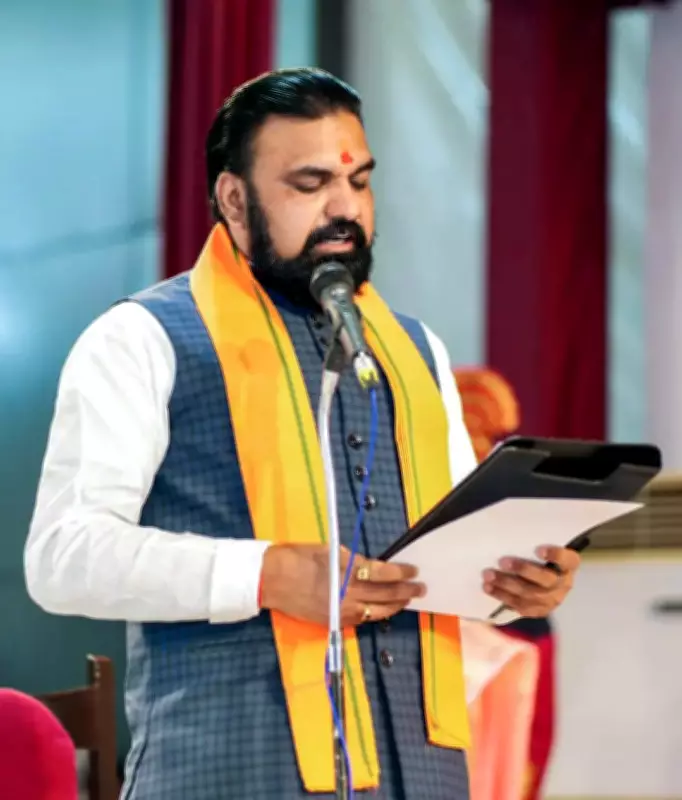
In a significant administrative move following the political transition in Bihar, the state government has officially allocated portfolios among the newly appointed ministers. This development comes shortly after BJP leader Samrat Choudhary assumed office as the new Chief Minister, succeeding JD(U) leader Nitish Kumar.
Chief Minister Retains Majority of Key Departments
According to a notification issued by the cabinet secretariat department, Chief Minister Samrat Choudhary has retained control over a substantial 29 departments. This includes the crucial Home portfolio, which previously remained with the BJP even before the power transfer. The allocation marks a notable shift as the Home department had been under former Chief Minister Nitish Kumar's direct supervision since November 2005.
The key departments under the Chief Minister's purview include:

- General Administration
- Home
- Health
- Cabinet Secretariat
- Revenue and Land Reforms
- Industry
- Road Construction
Additionally, the Chief Minister will oversee several other important departments such as Vigilance, Elections, Mines and Geology, Urban Development and Housing, Law, Agriculture, Minor Water Resources, and Labour Resources. The comprehensive list extends to Youth, Employment and Skill Development, Tourism, Arts and Culture, Dairy, Fisheries and Animal Resources, Disaster Management, Backward Classes and Extremely Backward Classes Welfare, Scheduled Castes and Scheduled Tribe Welfare, Information Technology, Sports, Cooperative, Environment, Forest and Climate Change, Sugar Cane, Public Health Engineering Department (PHED), and Panchayati Raj.
JD(U) Receives 18 Departments Through Deputy Chief Ministers
Meanwhile, the JD(U) quota has been allocated 18 departments, which have been distributed between the two Deputy Chief Ministers. Vijay Kumar Choudhary has been entrusted with 10 departments, while Bijendra Prasad Yadav will oversee 8 departments.
The departments assigned to Vijay Kumar Choudhary include:
- Water Resources
- Parliamentary Affairs
- Information and Public Relations
- Building Construction
- Minority Welfare
- Education
- Science, Technology and Technical Education
- Rural Development
- Transport
- Higher Education
Bijendra Prasad Yadav's portfolio comprises:
- Energy
- Planning and Development
- Prohibition, Excise and Registration
- Finance
- Commercial Taxes
- Social Welfare
- Food and Consumer Protection
- Rural Development
JD(U) Expresses Concern Over Portfolio Allocation
The JD(U) has voiced deep concern regarding the portfolio distribution, particularly emphasizing the retention of the Home department by the BJP despite the change in leadership. This marks the first time since the November 2025 assembly polls that the Home portfolio has moved away from the JD(U).
A senior JD(U) leader, speaking on condition of anonymity, expressed anguish over the allocation process. The leader highlighted the absence of prominent faces from extremely backward classes and Dalit communities in the cabinet, despite their longstanding support as "core voters" who have helped sustain the party's power over many years.
"What was more strange, our ally didn't even express thanks by passing a formal resolution for the kind of sacrifice displayed by our leader," the senior JD(U) leader remarked, reflecting on the political dynamics.
Another senior leader commented on the procedural aspects, noting with surprise that a meeting of the JD(U) legislature party was not conducted, whereas the BJP had organized such a gathering. "It appears the JD(U) has gone in the control of some unseen forces," the leader observed, indicating underlying tensions within the alliance.

Potential Distribution Among BJP Allies
BJP sources have indicated that some departments currently under the Chief Minister's control might be further distributed among the three BJP allies: Lok Janshakti Party (Ram Vilas) (LJP-RV), Hindustani Awam Morcha (Secular) (HAM-S), and Rashtriya Lok Morcha (RLM). This potential redistribution suggests ongoing negotiations and adjustments within the ruling coalition.
The portfolio distribution underscores the complex political landscape in Bihar following the leadership transition, with both administrative responsibilities and political equities being carefully balanced among the alliance partners.