

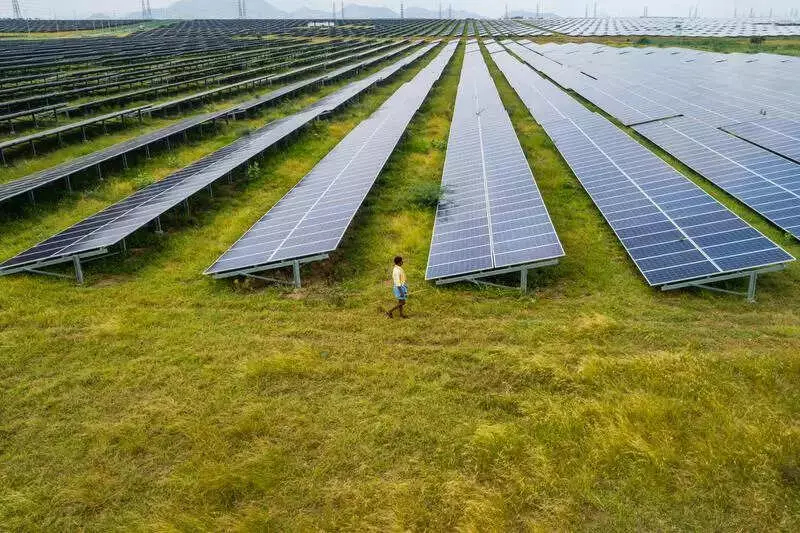
The ambitious plan to establish a major 500-megawatt solar park in Karnataka's Bidar district has been officially abandoned. The project faced insurmountable opposition from local farmers who were unwilling to provide their land under the proposed compensation terms, forcing both the central and state governments to scrap the high-value renewable energy initiative.
Land Acquisition Hurdles and Farmer Resistance
The nodal agency, Karnataka Renewable Energy Development Limited (KREDL), could only secure consent for about 200 acres of land, a mere fraction of the 2,000 acres required for the full-scale solar park. The project was initially planned across four villages in Aurad taluk. Farmers firmly rejected the compensation package, which was based on rates offered during the launch of the Pavagada solar park back in 2018. They argued that these outdated rates failed to reflect current land values and did not meet local economic requirements.
This stalemate led to the project's formal cancellation. In August 2025, Shripad Yesso Naik, the Minister of State for New and Renewable Energy, confirmed the decision in the Lok Sabha, stating, "The Bidar solar park was subsequently cancelled as the state govt was unable to identify land." The project had originally been proposed in Kalaburagi district before being shifted to Bidar at the state government's request.

A Blame Game and Missed Opportunities
The cancellation has sparked a political blame game between the state and central authorities. Union Minister for New and Renewable Energy, Pralhad Joshi, expressed the Centre's keenness on the project, highlighting its goal to boost national solar capacity. He pointed out that Karnataka stands to lose 30% of the central financial assistance earmarked for the project due to the lack of cooperation from the state government.
Joshi provided context on India's solar growth, noting that installed capacity has skyrocketed from 3 gigawatts in 2014 to over 130 gigawatts. Karnataka's own installed solar capacity was recorded at 10,642 megawatts as of November 2025.
However, District In-charge Minister Eshwar Khandre placed the blame squarely on the Centre, citing inadequate compensation as the core issue. "While farmers in neighbouring Maharashtra are getting Rs 50,000 per acre per year, the Centre is offering Karnataka farmers Rs 30,000 per acre per year on lease for the project," Khandre said. He added that even proposals for outright purchase did not satisfy local farmers, though negotiations are reportedly ongoing.
Future Prospects and Fallback Plans
With the Bidar plan shelved, authorities attempted to relocate the project to Madhugiri in Tumakuru district. This effort also failed to generate a positive response from farmers in that region. Consequently, KREDL officials have indicated they will not seek Central Financial Assistance (CFA) in the current funding cycle.
A KREDL spokesperson explained, "Due to the non-cooperation of stakeholders and demands for higher compensation, we will explore CFA during the next round of funding." This move underscores the significant challenges facing large-scale renewable energy projects when land acquisition and fair farmer compensation are not adequately addressed.
The collapse of the Bidar solar park serves as a critical case study in India's green energy transition, highlighting the delicate balance needed between ambitious national targets and the socio-economic realities of local communities.






