

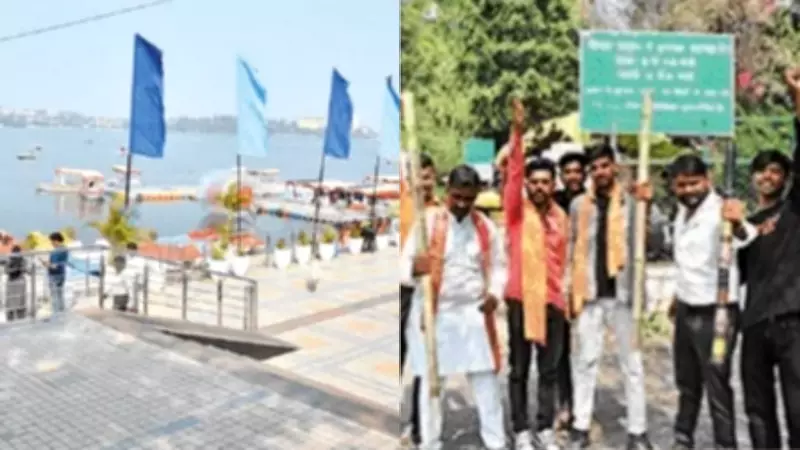
Valentine's Day in Bhopal Witnesses Clash of Ideologies
In Bhopal, Valentine's Day was marked by a stark contrast between competing street campaigns, with the right-wing Bajrang Dal engaging in moral policing while the Indian Youth Congress launched a counter-initiative called "Mohabbat ke Sipahi" (Soldiers of Love). This confrontation pitted traditional notions of public morality against modern ideals of personal freedom, creating a tense atmosphere across the city.
Bajrang Dal's Aggressive Patrols and Provocative Slogans
Bajrang Dal activists were observed patrolling numerous public spaces throughout Bhopal, specifically targeting areas popular with young people. Their surveillance extended to Upper Lake, a prominent mall in MP Nagar, and various nearby restaurants. The organization's stated mission was to prevent public displays of affection and discourage what they characterized as 'immoral' behavior.
During these patrols, some activists raised inflammatory slogans, including the threatening phrase: "Jahan milenge Bunty-Babli, tod denge haddi pasli" (Wherever we meet Bunty-Babli, we will break their bones and ribs). This aggressive rhetoric highlighted the confrontational nature of their campaign.

Rakesh Prajapati, district president of Bajrang Dal, defended the actions, stating: "We had made it clear that there should not be any indecent or immoral conduct by couples. Such campaigns are necessary to protect our youth from western influences." He emphasized that this form of moral policing has been a recurring practice during previous Valentine's Day celebrations.
Youth Congress's 'Soldiers of Love' Counter-Campaign
In direct response to the Bajrang Dal's activities, the Indian Youth Congress mobilized its own initiative titled "Mohabbat ke Sipahi" (Soldiers of Love). Youth Congress workers dispersed across Bhopal, positioning themselves at key public locations with the explicit purpose of offering support and protection to couples wishing to celebrate Valentine's Day without fear of harassment from right-wing groups.
These volunteers wore distinctive clothing and carried banners promoting messages of love and tolerance. They actively encouraged young couples to express themselves openly in public spaces, creating a visible counter-presence to the moral policing efforts.
Amit Khatri, district president of the Youth Congress, explained their motivation: "Our initiative was aimed at spreading love over hatred, fostering brotherhood instead of discrimination, and uniting society rather than dividing it." He characterized their campaign as a necessary pushback against what he described as "moral vigilantism."
Public Response and Police Presence
The competing campaigns significantly impacted public behavior in Bhopal. Numerous couples opted to avoid traditional public venues such as parks, eateries, and other popular meeting spots. Reports and social media posts indicated these locations were noticeably quieter than usual on Valentine's Day, with many couples preferring the privacy of their homes to avoid potential confrontations.
Local authorities deployed substantial police forces throughout the city to maintain order and prevent any escalation between the opposing groups. Fortunately, despite the tense atmosphere, no clashes or untoward incidents were reported as the day progressed.
This annual confrontation in Bhopal reflects broader societal tensions in India regarding cultural values, personal freedoms, and the influence of western traditions on local customs. The competing narratives of protection versus oppression, morality versus freedom, continue to play out in public spaces during celebrations like Valentine's Day.






