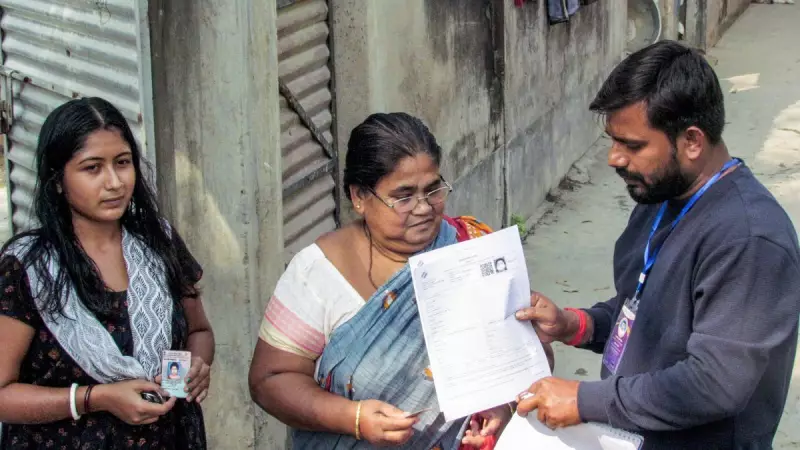
A significant revision of West Bengal's electoral rolls has led to the deletion of over 5.8 lakh voter names, sparking intense political debate and analysis. This massive clean-up operation, conducted by the Election Commission of India, aims to purify the voter list by removing duplicate, deceased, or otherwise ineligible entries. The data, when juxtaposed with election results from 2019 (Lok Sabha), 2021 (Assembly), and 2024 (Lok Sabha), provides a compelling narrative of the state's evolving political landscape and voter behavior patterns.
The Scale and Nature of the Voter List Revision
The sheer magnitude of the deletion—over 5.8 lakh names—highlights a major administrative exercise. Officials state this process is routine and crucial for maintaining the integrity of the electoral process, ensuring that only legitimate voters can cast their ballots. The removed names primarily belong to individuals who have either passed away, relocated, or were found to be registered multiple times. While the exercise is technically neutral, in West Bengal's highly charged political atmosphere, every change to the voter list is scrutinized for potential partisan impact. Opposition parties often raise concerns about the methodology, fearing genuine voters might be disenfranchised, whereas the ruling party and election authorities defend it as a necessary purge of ghost voters.
This revision is not an isolated event but part of a continuous process. However, its timing and scale bring it into sharp focus, especially as political analysts and parties dissect its potential effect on future electoral contests. The cleaned list now forms the baseline for upcoming elections, making its accuracy a matter of paramount importance for all stakeholders.

Decoding the Political Trajectory: 2019, 2021, and 2024
To understand the context of this voter list change, one must look at the last three major electoral battles in the state. The 2019 Lok Sabha elections saw the Bharatiya Janata Party (BJP) make unprecedented inroads, winning 18 seats and significantly increasing its vote share, which sent shockwaves through the state's traditional political framework dominated by the Trinamool Congress (TMC) and the Left Front.
This was followed by the intensely fought 2021 West Bengal Assembly elections. Despite a fierce campaign by the BJP, the TMC, led by Chief Minister Mamata Banerjee, secured a resounding victory, retaining power with a strong majority. This result demonstrated the TMC's resilience at the state level and its deep-rooted connection with a significant portion of the electorate.
The most recent 2024 Lok Sabha elections presented a more complex picture. The TMC managed to consolidate its position, improving its seat count from 2019, while the BJP's tally reduced. The election reaffirmed the TMC's dominance in state politics but also indicated specific regional shifts and the consolidation of minority votes. Analyzing voter turnout, winning margins, and demographic data from these three elections reveals a state in political flux, with allegiances shifting between national and state-level issues.
Implications and the Road Ahead
The deletion of such a large number of voters, therefore, occurs against this backdrop of competitive politics. The immediate implication is a more accurate and potentially smaller electoral roll. This could affect constituency-wise calculations for all political parties, as they recalibrate their outreach and mobilization strategies based on the new list. Margins of victory in closely fought seats, which are common in Bengal, could be influenced by these changes if the deleted names were concentrated in specific areas.
Furthermore, this event underscores the critical importance of electoral roll integrity in Indian democracy. It brings to the fore discussions about linking voter ID with Aadhaar, using technology to eliminate duplicates, and ensuring transparent processes that all parties can trust. For the average voter, it is a reminder to verify their registration status well before elections.

In conclusion, the deletion of over 5.8 lakh names is more than an administrative statistic. It is a key piece in the puzzle of West Bengal's political trajectory. When combined with the results of 2019, 2021, and 2024, it points to a state where electoral outcomes are fiercely contested, where the voter list itself is a battleground, and where every single vote holds immense value. The coming years will show how this refined electoral roll shapes the fortunes of Bengal's political players.