A senior BJP leader in West Bengal has ignited a massive controversy by suggesting that men should lock up their wives to prevent them from voting for the ruling Trinamool Congress (TMC). The remark, targeting women beneficiaries of the state's flagship Lakshmir Bhandar scheme, has drawn sharp condemnation from rival parties and triggered a political firestorm.
Controversial Call at Public Rally
The incident occurred on Saturday at a public rally in Dantan, located in West Midnapore district. Kalipada Sengupta, a member of the Bengal BJP state committee, made the contentious appeal. He stated that husbands should put their wives under lock and key if they planned to vote for the TMC after availing benefits from the Lakshmir Bhandar scheme. Sengupta insisted that votes should be cast for the BJP instead.
"There are mothers who took benefits from Lakshmir Bhandar and will vote for Trinamool. I urge husbands of those mothers to put them under lock and key. The votes should be cast for BJP, not Trinamool," Sengupta said at the rally. Junior Union Minister Sukanta Majumdar also spoke at the event in Kalaikundu village following Sengupta's comments.
Trinamool Congress Launches Fierce Counterattack
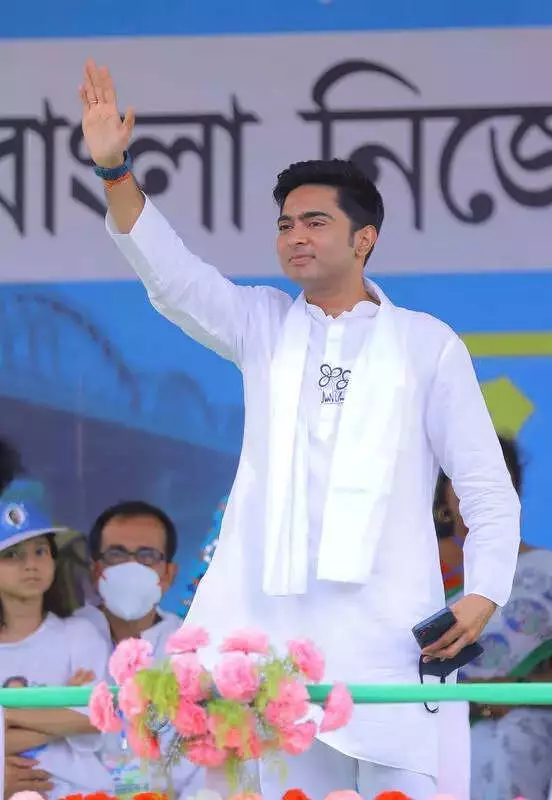
The TMC reacted swiftly and fiercely to the statement. Abhishek Banerjee, the party's national general secretary, took to social media platform X to accuse the BJP of deploying a "Bangla-Birodhi toolkit." He alleged that after failing to delete voters' names during the Summary Revision of the electoral roll, the BJP had now "sank to feudal and patriarchal barbarism."
Banerjee's post further accused the BJP of threatening to scrap the Lakshmir Bhandar scheme, mocking Bengali Hindus, and describing direct aid to women as "alms." He concluded by predicting that in the 2026 elections, women would "march to polling booths in millions and bury your (BJP's) regressive, Bangla-Birodhi, Nari-Birodhi politics forever."
Senior TMC ministers also joined the criticism. Shashi Panja, the state's Women and Child Development Minister, highlighted that this was not the first time BJP leaders had insulted Lakshmir Bhandar beneficiaries, having previously called them "beggars." She pointed out that Majumdar, who spoke after Sengupta, did not correct him, implying the party's tacit approval.
Chandrima Bhattacharya, the state Finance Minister, asserted that women are the driving force of Bengal's society and economy and would not accept such behavior silently.
BJP's Mixed Response and Justification Attempt
The BJP's reaction to the controversy has been mixed. While the party officially distanced itself from Sengupta's specific remarks, the leader himself remained unapologetic. On Sunday, Sengupta attempted to justify his statement by linking it to unemployment. He argued that women should consider their unemployed sons and husbands before voting for the TMC.
"There are no jobs in the state. Women get Lakshmir Bhandar and vote for TMC, while their sons and husbands are forced to migrate to other states for work," Sengupta defended.
In a press conference, Union Minister Sukanta Majumdar clarified the BJP's stance on the welfare scheme. He assured that if the BJP comes to power in the state, the Lakshmir Bhandar scheme would continue, albeit possibly under a different name and with increased financial assistance. He also promised job opportunities for the husbands of the beneficiaries.
At the local level, Tanmay Das, the BJP Ghatal organisation district president, explicitly stated that the party did not support Sengupta's statement and was working towards women's welfare and empowerment.
Political Fallout and Electoral Implications
This incident has sharply brought into focus the political battle over women voters in West Bengal, a key demographic empowered by schemes like Lakshmir Bhandar. The TMC has positioned itself as the champion of women's welfare, while the BJP is attempting to challenge that narrative by promising enhanced benefits and addressing issues like male unemployment.
The use of such patriarchal language by a political figure, however, risks alienating the very voter base parties are trying to woo. The controversy underscores the intense and often contentious nature of political discourse in Bengal, where welfare schemes and identity politics are deeply intertwined with electoral fortunes. The remarks and the subsequent backlash are likely to resonate in the political landscape as the state moves toward future electoral contests.