Bengal BJP Leaders Offer Varied Explanations for PM Modi's Silence on Tata in Singur Speech
Prime Minister Narendra Modi's Sunday address in Singur, West Bengal, left many local BJP leaders seemingly surprised. The speech notably avoided any direct mention of Tata Motors or specific industrial plans for the region. This omission prompted a flurry of explanations from Bengal BJP figures on Monday, as they attempted to justify what one senior party member called a "considered omission."
Multiple Voices Emerge to Justify the Omission
A senior state BJP leader revealed that issues concerning industrialisation, particularly in Hooghly district and Singur, had indeed been forwarded to the Prime Minister's Office. Despite this, PM Modi consciously chose not to reference the factory or Tata in his remarks. The leader described this decision as a deliberate and thoughtful move by the Prime Minister.
This silence stood in contrast to the narrative many BJP leaders, including junior Union minister Sukanta Majumdar, had been building ahead of the PM's visit. They had actively highlighted the exit of Tata Motors from Singur as a key talking point.

Leadership Perspectives on the Strategic Silence
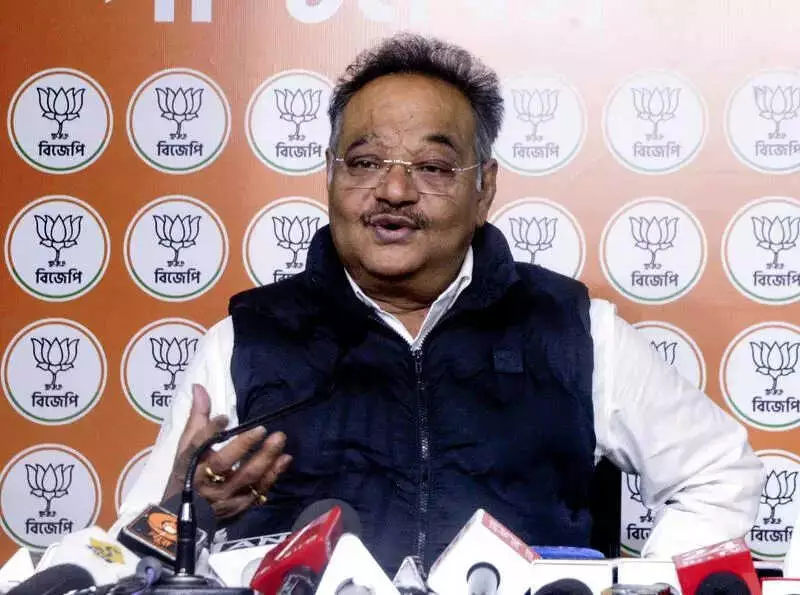
Bengal BJP president Samik Bhattacharya, speaking from New Delhi, offered his interpretation. He stated that the Prime Minister's very presence in Singur sent a powerful message about industrialisation. "Certain things are better unsaid," Bhattacharya remarked, suggesting the omission was strategic.
Former state BJP chief Dilip Ghosh presented a more pragmatic view earlier on Monday. He argued that discussing potential investments from large corporations was currently pointless. Ghosh pointed to what he described as a lack of a conducive environment in West Bengal. "Which industrialist is going to take the risk unless the law and order situation in the state improves?" he questioned, noting that industrialists from Bengal have shifted operations to neighbouring Odisha. He concluded that the Prime Minister is fully aware of this ground reality.
Local Leaders Express Mixed Reactions
BJP leader Sajal Ghosh echoed the need for a broader vision. He felt that mentioning a single prospect in Singur would not address the wider issue of industrial lack across Bengal. "We have to go for large-scale industrialisation across the state. Closed factories have to be reopened," he asserted, calling for a comprehensive approach.
However, BJP leaders directly from Singur expressed a different sentiment. They believed the Prime Minister could have sent a more direct message to the local farmers. Sanjay Pandey, a BJP unit leader from Singur, acknowledged that Modi correctly identified Bengal's unfavourable industrial climate. Yet, he added, "It would have been better if he expressed his thoughts in more concrete terms, as the farmers joined the rally with an expectation."
Legal Hurdles and Broader Industrial Vision
Raju Mal, a leader from the Bharatiya Janata Majdoor Cell, brought up the ongoing legal complications. He noted that the acquired land in Singur remains under litigation. Mal suggested the Prime Minister considered these and other related aspects before deciding to omit the topic from his speech. While Tata Motors was not named, Mal highlighted that Modi did address the law and order situation, which he sees as detrimental to industrial growth in the state.
In a more positive response, Gautam Chatterjee, the BJP's Hooghly organisational district president, expressed satisfaction. He was pleased with PM Modi's focus on a cluster-based and district-wise blueprint for industrialisation in Bengal. "He spoke about the ways to empower the poor, and that is applicable to every district," Chatterjee said, appreciating the broader economic vision outlined in the speech.
The event has clearly sparked a conversation within the state BJP, revealing a spectrum of interpretations regarding the Prime Minister's strategic decision to remain silent on a once-central issue in Singur's political and industrial landscape.