West Bengal Sets Ambitious Rs 4,500 Crore Revenue Target for Transport Department
In a bold move to boost state finances, the West Bengal government has announced a target of collecting a record Rs 4,500 crore in revenue from the transport department for the 2025-26 financial year. This ambitious goal is part of a comprehensive strategy focusing on green and digital initiatives to modernize the state's transportation infrastructure.
Significant Revenue Collection Already Achieved
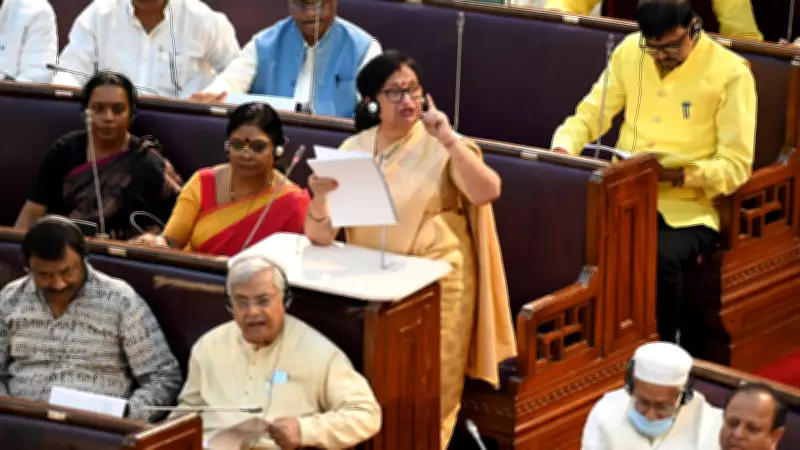
State Finance Minister Chandrima Bhattacharya revealed during a recent Assembly session that as of November 2025, the state has already amassed Rs 2,922.43 crore. This impressive figure marks a substantial increase from previous years, with notable contributions from digital platforms such as the 'Suvidha' and 'Uttar Suvidha' portals. The current trajectory shows a remarkable climb from just Rs 936.01 crore in 2010-11, with steady growth over recent fiscal periods.
Budget Allocation and Green Mobility Push
To sustain this upward momentum, the state has proposed a budget allocation of Rs 2,307.30 crore for the transport department in the upcoming 2026-27 fiscal year. A key component of this initiative is a strong emphasis on reducing air pollution. The government has deregistered over 2.04 lakh vehicles older than 15 years from the Vahan database and established 30 retro-fitment centers to assist affected vehicle owners.

Additionally, the launch of the Vahan Green Sewa portal allows manufacturers of CNG, LPG, and electric kits to enroll, facilitating the transition to cleaner fuels. More than 1.66 lakh vehicles have been converted to cleaner fuel kits, including 11,581 motor cabs in the past year alone.
Electrification and Infrastructure Development
The West Bengal Transport Corporation (WBTC) is actively moving towards a hybrid future, with 120 electric buses currently operational across the state. Plans are underway to procure an additional 225 CNG buses and install 84 EV chargers at 19 bus depots to support this green shift.
In a parallel effort to promote eco-friendly water transport, the state has introduced the 'Dheu' ferry, a Rs 6 crore CNG-electric vessel now in service. Furthermore, 13 new electric-diesel vessels are under construction with an estimated cost of ₹240 crore, supported by a World Bank-assisted project. Under the Jaldhara Scheme, 119 traditional boats have been mechanized and modernized to enhance safety and efficiency.
Digital Enhancements and Safety Measures
The government is also prioritizing commuter security through the Vehicle Location Tracking System (VLTS), which has installed tracking devices in 1,78,973 vehicles as of November 2025 to safeguard women and children. The state-backed ride-hailing app, 'Yatri Sathi', continues to gain traction with over 1.26 lakh registered drivers, offering a reliable, zero-commission alternative to private ride-sharing services.
Streamlined Logistics and Economic Impact
The 'Suvidha' portal has significantly streamlined international logistics at key India-Bangladesh border check-posts, including Petrapole, Hili, and Changrabandha. By late 2025, it had processed over 2.32 lakh vehicles and generated ₹151.12 crore in trade revenue, demonstrating its economic impact.
State officials highlighted that these integrated efforts are yielding life-saving results, with improved surveillance and stricter safety protocols leading to a significant reduction in road accidents compared to 2015 levels. This holistic approach underscores West Bengal's commitment to fostering a safer, greener, and more digitally advanced transportation ecosystem.