

Bathinda Police Register Five FIRs Against Over 2,000 BKU Activists Following Violent Clashes
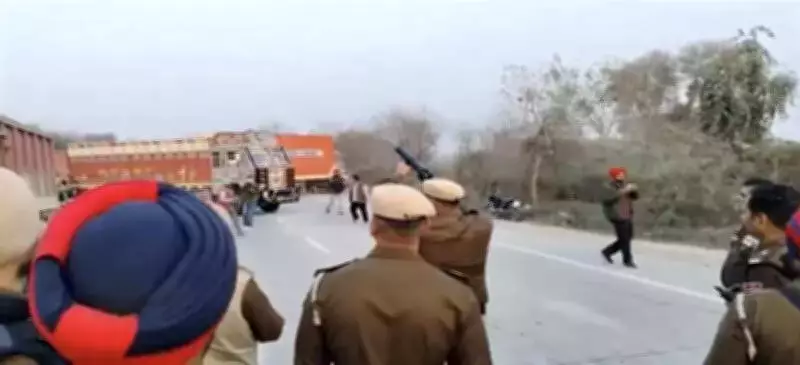
In a significant escalation of tensions, Bathinda police on Sunday registered five separate First Information Reports (FIRs) at five different police stations against more than 2,000 activists affiliated with the farm organization BKU (Ekta Ugrahan). This action comes just one day after a major confrontation between law enforcement and protesters, highlighting ongoing unrest in the region.
Charges Include Highway Blockade and Endangering Public Order
The charges detailed in the FIRs are severe, encompassing the blocking of a national highway and endangering law and order. Police officials stated that the protesters engaged in activities that disrupted traffic and posed risks to public safety, necessitating a robust response from authorities.
Breakdown of the Five Cases Filed by Bathinda Police
Case 1: The largest case targets an estimated 1,400 to 1,500 activists who assembled in Jeond village. According to police reports, these individuals moved onto the national highway and blocked it for several hours. Authorities noted that the protesters broke through barricades, forcing police to deploy tear gas shells to disperse the crowd and restore order.

Case 2: A separate FIR has been filed against 250 to 300 activists who gathered near Gurdwara Laverisar at Bhucho. Police allege that this group also broke barricades, contributing to the chaos and requiring intervention to prevent further escalation.
Case 3: Another case involves 200 to 220 activists who assembled at the T-point on the Bathinda–Malout road. Police stated that these protesters attempted to breach the security cordon, compelling officers to use some force to stop them and maintain control of the situation.
Case 4: Yet another FIR has been registered against 150 to 170 activists at the T-point on the Bathinda–Barnala road. Authorities allege that this group tried to break the cordon with the intent to reach the Bathinda district administrative complex to launch an indefinite protest, signaling a prolonged disruption.
Case 5: An additional case has been filed for allegedly laying siege to Bathinda DSP Gurpreet Singh when he went for parleys with the protesting farmers. This incident underscores the volatile nature of the negotiations and the challenges faced by police in managing the protest.
Police Response and Investigation Details
Bathinda SP (City) Narinder Singh provided insights into the police's stance, emphasizing that the protesters ignored repeated requests by duty magistrates to vacate the national highway and cease disrupting traffic. He detailed the distribution of cases: two cases have been registered at Bathinda Cantonment police station, two at Rampura Sadar police station, and one at Bathinda Sadar police station.
Singh further explained that while the cases have been registered against unidentified activists, police are actively scanning video and CCTV footage to identify the individuals involved. This investigative effort aims to ensure that appropriate legal action is taken against those responsible for the disruptions.
Background: BKU's Demands and Previous Arrests
The protests were organized by BKU (Ekta Ugrahan) as part of a campaign demanding the release of its activists, Shagandeep Singh and Baldev Singh. Both individuals were arrested on April 5, 2025, following clashes between BKU activists and police at Rampura Phool. These clashes occurred while the activists were supporting protesting teachers of the Adarsh School in Chaoke village. Shagandeep Singh and Baldev Singh have been in jail for over 10 months, fueling the organization's calls for their release and leading to the recent demonstrations.
BKU (Ekta Ugrahan) had called for laying siege to the Bathinda district administrative complex on February 6, a move that precipitated the violent confrontations and subsequent police action. The situation remains tense as authorities continue their investigations and the farm organization persists in its demands, highlighting deep-seated issues in the region's agricultural and political landscape.






