Baramati's Emotional Farewell to Ajit Pawar: A Town Transformed by Grief and Legacy
In the heart of Maharashtra, the town of Baramati stood still on January 28, as news spread that Ajit Pawar was no more. The symbolic clock of the Nationalist Congress Party, typically frozen at 10.10 am, seemed to halt at 8.44 am that fateful morning. This stillness permeated the air in the Pawar family's home turf, where residents absorbed the profound loss with a palpable sense of shock and sorrow.
A Town in Mourning: Shutters Down, Hearts Heavy
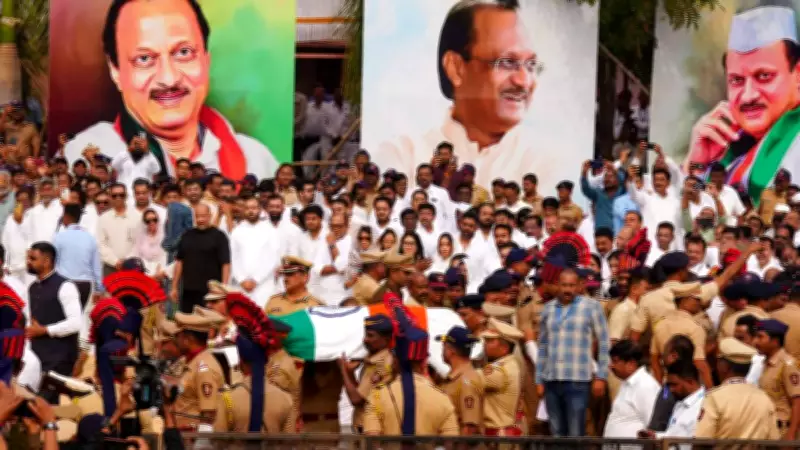
As the reality set in, people across Baramati began to respond instinctively. Shopkeepers downed their shutters, families locked their homes, and a steady stream of mourners started moving towards key locations: the airport, the hospital, and finally, the grounds of Vidya Pratishthan. This educational institution became the focal point where Ajit Pawar's mortal remains would be brought for a final glimpse, drawing thousands who gathered in silent tribute.
The scene at Vidya Pratishthan was both solemn and revealing. Women, in particular, showed touching support for the man who had instituted the Ladki Bahin scheme, sitting patiently on the steps with stony faces and teary eyes. On the stage, VIPs and politicians, usually eager for media attention, responded to requests with folded hands, some choking up mid-sentence. This display of genuine emotion underscored the deep connection Ajit Pawar had forged with his constituents.

Political Undercurrents and Family Reconciliation
Reflecting on the 2024 Lok Sabha elections campaign in Baramati reveals interesting contrasts. During that period, Ajit Pawar's wife Sunetra faced incumbent MP Supriya Sule, with political analysts predicting a win for Sunetra due to Ajit's stronghold and the influential sugar mills of Maharashtra. However, conversations with residents revealed an unmistakable undercurrent of support for Sharad Pawar, still viewed as the real architect of Baramati's development. Many saw Ajit, affectionately called Dada, as carrying forward his mentor's work, yet expressed unhappiness over the party and family split he had maneuvered.
Supriya Sule ultimately won by a comfortable margin, but the Baramati of January 28 was vastly changed. The grief here was not fleeting; it struck at the core of the community. A poignant moment occurred as Supriya Sule strode onto the stage, one arm around Sunetra Pawar, the other shielding her from the crowds. This gesture seemed to melt away years of family differences, symbolizing a heartfelt reconciliation in the face of tragedy.
From Upstart to Mentor: The Winds of Change
The following day, as the crowd swelled from thousands to lakhs at the funeral, it became evident that the winds had quietly but certainly changed in Baramati. Ajit Pawar, once labeled an upstart, had finally become the mentor he always aspired to be. This transformation was hinted at earlier, with his party's decisive sweep in the municipal council elections of December 2025. Although the united NCP faced defeat in corporation elections in January, the coming together of factions marked a small but significant win.
Soon after, the two parties announced a joint battle for the Zilla Parishad elections, this time under the combined symbol of the clock—a contentious issue since the split. It seemed time was finally on Ajit Pawar's side, aligning with his aspirations until tragedy struck. His legacy, now cemented in the hearts of Baramati's residents, reflects a complex journey from political maneuvering to enduring influence.
In conclusion, Baramati's long goodbye to Ajit Pawar was not just a moment of mourning but a testament to shifting dynamics in Maharashtra politics. The emotional outpouring, family reconciliation, and clear signs of political evolution highlight how he transitioned from a divisive figure to a revered mentor, leaving an indelible mark on his hometown and beyond.