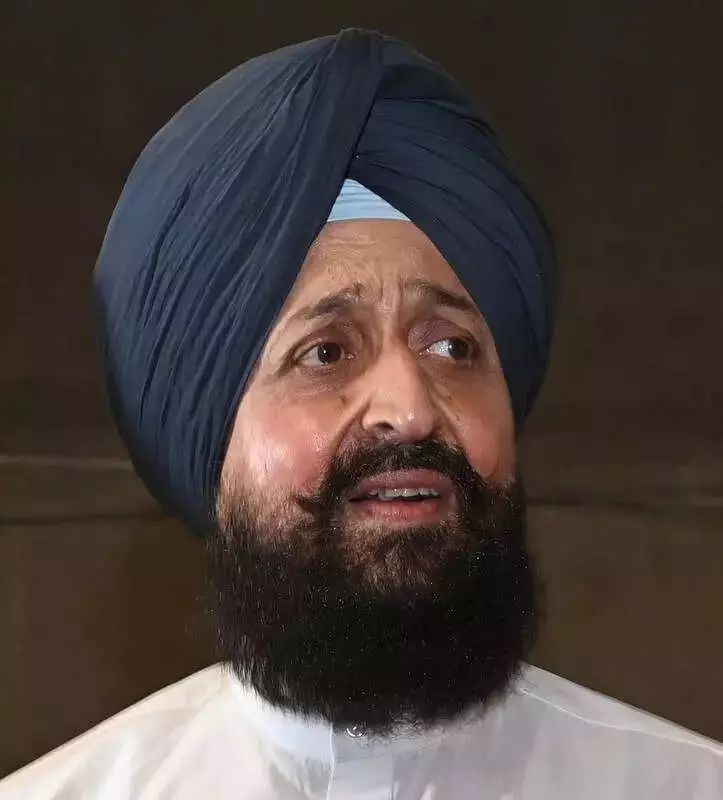
Leader of Opposition in the Punjab Vidhan Sabha, Partap Singh Bajwa, launched a scathing critique on Tuesday, targeting both the Bharatiya Janata Party-led central government and the Aam Aadmi Party administration in Punjab. The attack came after a special session of the state assembly, where Bajwa accused the two governments of jointly eroding the constitutional right to work, principles of federalism, and the dignity of the poor.
MGNREGA: A Historic Right, Not Charity
Bajwa took the assembly back nearly two decades, recalling India's historic enactment of the Mahatma Gandhi National Rural Employment Guarantee Act (MGNREGA). He emphasized that the law was designed not as a charitable welfare scheme but as a legal right guaranteeing work, wages, and dignity to rural households, with a special focus on Dalits and women. The Congress leader noted that the legislation was the product of a year-long consultative process involving workers' unions, social movements, economists, Parliament, and the Prime Minister's Office, achieving a rare bipartisan consensus. "That consensus was unambiguous: work is not charity; work is a right," Bajwa asserted.
Highlighting the scheme's transformative impact, Bajwa credited MGNREGA with:

- Guaranteeing 100 days of employment.
- Raising rural wage levels significantly.
- Reducing poverty and checking distress migration.
- Empowering women across rural India.
- Acting as a critical lifeline during droughts and the COVID-19 pandemic.
He pointed out that in regions with strong implementation, household earnings saw a notable rise while poverty declined sharply.
Systematic Weakening of a Legal Guarantee
The opposition leader then turned his fire on the BJP government at the Centre, accusing it of systematically weakening MGNREGA since 2014. He alleged a pattern of chronic underfunding, inordinate delays in wage payments, and the creation of administrative barriers. Despite a clear rise in the demand for work under the scheme, Bajwa claimed that fund allocations have stagnated, wage arrears have piled up, and the average number of workdays provided has fallen far below the statutory guarantee of 100 days.
"This is not administrative failure; this is a deliberate strategy to hollow out a rights-based law," he charged, framing the issues as a conscious policy move rather than mere inefficiency.
New Bill Mirrors Farm Laws Arrogance, Says Bajwa
Bajwa reserved particularly harsh criticism for the newly introduced VB G-RAM-G Bill. He alleged the bill was forced through without adequate consultation or meaningful parliamentary debate. According to him, the proposed legislation fundamentally alters the nature of MGNREGA by converting a demand-driven legal entitlement into a centrally controlled scheme with limited allocations.
"This bill converts a demand-driven legal entitlement into a centrally controlled, allocation-limited scheme. It dilutes federalism, shifts the financial burden onto states, and strips workers of enforceable rights," Bajwa warned. He drew a parallel between the passage of this bill and the contentious farm laws, suggesting it exhibited the same kind of arrogance from the central government. The move, he argued, represents a direct assault on the cooperative federal structure of the Indian Constitution and the economic safety net of the rural poor.