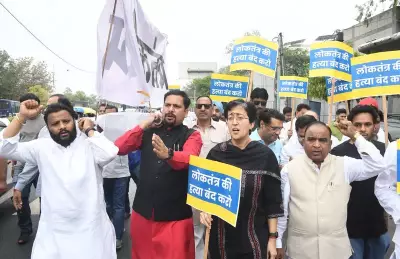
In a significant move highlighting a deepening institutional crisis, the Leader of the Opposition in Punjab, Partap Singh Bajwa, has formally accused the ruling Aam Aadmi Party (AAP) government of systematically undermining the state's legislative assembly. In a strongly-worded letter to the Speaker of the Punjab Vidhan Sabha, Bajwa has raised alarms over what he calls a deliberate distortion of constitutional functioning.
Allegations of Constitutional Distortion and Erosion
Partap Singh Bajwa has charged that the sanctity and purpose of the Punjab Vidhan Sabha are being severely compromised. His central allegation is that the government is intentionally replacing regular, full-fledged sessions of the assembly with selectively convened special sessions. According to the opposition leader, this calculated shift is not a minor procedural issue but a grave constitutional distortion that strikes at the very heart of legislative democracy.
Bajwa revealed that he has repeatedly raised concerns about the deliberate reduction in the number of sittings of the House, only to be met with indifference. He emphasized that the assembly's fundamental role is to deliberate on critical issues, question the executive, scrutinize policies, and hold the government accountable. However, the current trend, he argues, is transforming the House from a forum of democratic accountability into what he termed a "stage-managed spectacle."

From Demands to Abandonment: A Political U-Turn
Bajwa pointed out a stark contradiction in the AAP government's current stance compared to its past promises. He reminded the Speaker that political forces now in power, specifically the AAP, had once been strong advocates for constitutional morality, democratic values, and institutional integrity. They had previously demanded a minimum of 40 sittings of the assembly annually, as mandated under the Rules of Procedure and Conduct of Business. Bajwa lamented that this very principle has now been abandoned by the same party after assuming office.
The leader of opposition criticized the growing reliance on special sessions, which he claims are often stripped of meaningful legislative tools. He stated that these sessions lack a proper Question Hour, Zero Hour, and opportunities for substantive debates. This shrinking of legislative time, according to Bajwa, leads to an evasion of scrutiny and prevents thorough discussion on pressing state matters.
Urgent Call to Action Amidst State Crises
Highlighting the severe challenges facing Punjab, Bajwa's letter cited a range of critical issues that demand the assembly's continuous and serious attention. These include:
- Deteriorating law and order situation.
- The rampant spread of drugs.
- A collapsing public health system.
- Widespread groundwater contamination.
- Mounting debt stress on the state's economy.
Bajwa argued that these complex problems require dedicated deliberation in the House, not blame-shifting or political theatrics. He urged the Speaker to act as the custodian of the House's dignity and authority. His specific demands include:
- Convening full, regular sessions of the Vidhan Sabha.
- Ensuring a minimum of 40 sittings per year as per the existing Rules.
- Protecting the sanctity of Question Hour, Zero Hour, and special discussions from any dilution.
This confrontation sets the stage for a major political battle over legislative norms in Punjab, with the opposition framing it as a fight to preserve democratic accountability against a government they accuse of centralizing control and avoiding scrutiny.