Assam Evictees Opt to Vote, Worried About Future Land Allotment and Electoral Rolls
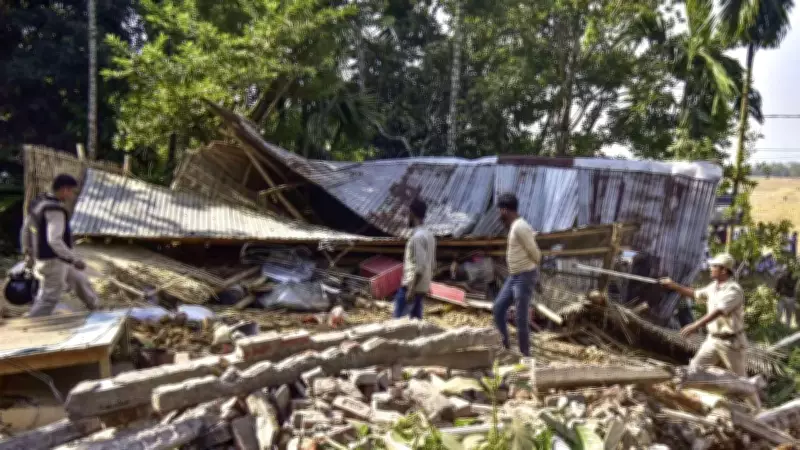
In a significant shift, nearly 6,000 people evicted from the Lutumari Reserved Forest in Assam, who had previously threatened to boycott the upcoming elections due to prolonged delays in land allotment for rehabilitation, have now decided to participate in the voting process. These families, enrolled as voters in the Hojai assembly constituency, express deep concerns that abstaining from the polls could severely jeopardize their future chances of securing plots for resettlement. They fear that such a move might also lead to their names being removed from the electoral rolls, further marginalizing them in the political landscape.
Struggles of Displaced Families in Temporary Shelters
Over 1,200 Bengali-speaking Muslim families were evicted by the Nagaon district administration for allegedly occupying nearly 6,000 bighas of the forest, which was notified over a century ago. Despite having lived there for several decades, these families now face immense hardship. Approximately 200 of them have spent the last four months under tarpaulin sheets pitched along a village road at Chankhula, turning the roadside into a fragile and temporary shelter. Located nearly 8 kilometers from the eviction site, Chankhula has become their uncertain home, where they grapple with exposure to the elements and the daily anxiety of whether they will ever return to their original residences.
Rashid Ali, a 47-year-old evictee from No.-2 Majgaon, shared his perspective: "Initially, we all decided to boycott the election. Since the eviction, no one from any political party has asked how we have been spending our days and nights. Our demand for rehabilitation remains the same. But people here decided to vote instead of boycotting — otherwise, it might create problems in the future." His residence was among about 800 families in No.-2 Majgaon, one of the villages targeted in the eviction drive.

Historical Context and Forced Migration
Abdul Hameed, aged 115, recounted that most families had settled in No.-2 Majgaon inside the forest in 1983. They were forced to flee their earlier homes in Barpeta district in lower Assam, Morigaon in central Assam, and parts of Nagaon district due to the violence that marked the six-year anti-foreigner movement between 1979 and 1983. This historical displacement adds another layer to their current plight, as they now face eviction from the very land that provided them refuge decades ago.
Goalpara Evictees Travel to Former Forest Polling Booth
In a parallel development, nearly 1,000 of the 1,497 people evicted from the Paikan Reserved Forest in Assam’s Goalpara district last year are set to travel to the forest area on Thursday. Their purpose is not to reclaim the land they once inhabited but to exercise their franchise at the Bidyapara ME School polling booth, which falls within the forest land in the Goalpara East constituency. Interestingly, their designated polling station ceased to exist after the eviction and has since been converted into a forest department office. However, election officer Pallabi Borah confirmed that the forest department has vacated the premises temporarily to facilitate voting.
Johrul Sheikh, a resident of Bidyapara who was evicted along with several others, highlighted the ongoing struggles: "The situation is the same for other evicted families. They are all living like us." His family does not own land anywhere else in the state and is currently sheltering at a relative’s house near the eviction site. Despite these challenges, he affirmed their commitment to voting: "We have been voting there for nearly four decades, ever since we began living in the area — until the evictions were carried out. We are going to vote this year as well, and our demand for rehabilitation will remain until it is met."

Democratic Resolve Amidst Adversity
The decision by these evicted communities to vote underscores a profound commitment to democratic participation, even in the face of displacement and uncertainty. They emphasize that while their primary demand for rehabilitation remains unmet, they do not want to miss their democratic right. This move reflects a strategic choice to maintain their presence in the electoral system, hoping it will pressure authorities to address their rehabilitation needs in the future. The contrasting scenarios in Hojai and Goalpara illustrate the complex interplay between land rights, political engagement, and survival in Assam's forested regions.