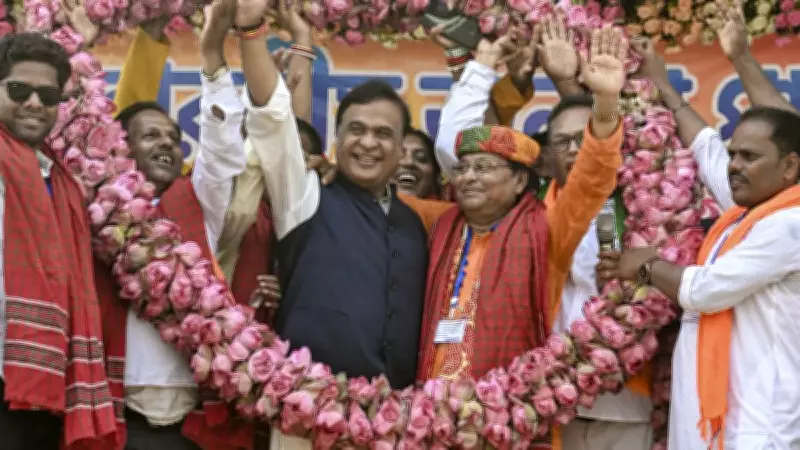
The Himanta Biswa Sarma-led National Democratic Alliance (NDA) has crossed the majority mark in the Assam Assembly elections 2026, paving the way for the alliance to form the government for a second consecutive term. According to the latest trends and results from the Election Commission, the NDA has secured over 65 seats in the 126-member assembly, comfortably surpassing the halfway mark of 63.
Dominant Performance by BJP and Allies
The Bharatiya Janata Party (BJP), the leading constituent of the NDA, has performed exceptionally well, winning or leading in over 50 seats. Its key allies, including the Asom Gana Parishad (AGP) and the United People's Party Liberal (UPPL), have also contributed significantly to the alliance's tally. The opposition, led by the Congress party and the All India United Democratic Front (AIUDF), has fallen short of expectations, with the Congress managing to secure only around 20 seats.
Chief Minister Himanta Biswa Sarma's Victory
Chief Minister Himanta Biswa Sarma himself has won from his constituency with a comfortable margin, solidifying his position as the leader of the state. In his victory speech, Sarma thanked the people of Assam for their trust and reiterated his commitment to development and inclusive growth. He also highlighted the achievements of his previous tenure, including infrastructure development, healthcare improvements, and educational reforms.

Key Factors Behind NDA's Victory
Political analysts attribute the NDA's success to several factors, including effective governance, welfare schemes, and strong grassroots campaigning. The central government's policies, such as the implementation of the Citizenship Amendment Act (CAA) and the National Register of Citizens (NRC), also resonated with a significant section of voters. Additionally, the alliance's focus on infrastructure projects and cultural development helped consolidate support.
Opposition's Performance and Future Strategy
The Congress party, which led the opposition alliance, has acknowledged the defeat and promised to regroup for future elections. Party leaders cited internal divisions and a lack of cohesive messaging as reasons for the poor showing. The AIUDF, which had hoped to make inroads, also failed to gain significant ground. Both parties are expected to analyze the results and strategize for upcoming local body elections.
Conclusion
With the NDA set to form the government, Himanta Biswa Sarma is likely to be sworn in as Chief Minister for another term in the coming days. The alliance's victory is seen as a reaffirmation of the BJP's growing footprint in the northeastern region of India. The new government is expected to continue its focus on development, security, and cultural preservation.