Assam Chief Minister Brings Beef Consumption Issue into Election Campaign
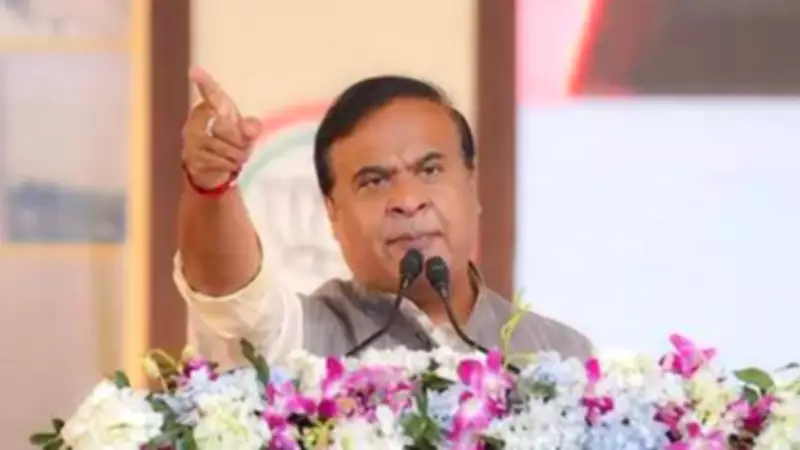
In a significant development during the ongoing election campaign, Assam Chief Minister Himanta Biswa Sarma has introduced the controversial issue of beef consumption into the political discourse. On Sunday, Sarma directly targeted Kunki Chowdhury (27), the candidate of Congress' key ally Assam Jatiya Parishad (AJP) from the Guwahati Central seat, making serious allegations about her family's dietary habits.
Serious Allegations Against Opponent's Family
The Chief Minister accused Kunki Chowdhury's parents of consuming beef and claimed they had uploaded photographic evidence of this on social media platforms. "Kunki's mother, Sujata Gurung Chowdhury, had shared posts related to beef consumption and made remarks hurting the sentiments of 'Sanatani' people," Sarma told reporters during a press interaction.
He went further to declare his intention to take legal action after the election concludes. "After the election, I will act against Kunki's parents under Cattle Prevention Act. I will accept everything, but not beef eating," the Chief Minister stated emphatically, making his position on the matter unequivocally clear.

Candidate Denies Allegations as "Fake and Baseless"
Kunki Chowdhury, the AJP candidate at the center of this controversy, has categorically denied all allegations made by the Chief Minister. She described the accusations as "fake and baseless" and refuted the claims about her parents' dietary practices. The young candidate finds herself in the middle of a heated political debate that has shifted focus from traditional election issues to cultural and religious sensitivities.
Ultimatum and Religious Sentiments
Chief Minister Sarma presented what he described as a way out for the candidate, though it came with significant conditions. "Forget whether Kunki wins or loses... Let her say that her parents eat beef, she is a Sanatani Hindu, and she has disowned them. If she says she is not with her parents, then I am with her," Sarma declared, creating a stark choice for the opposition candidate.
The Chief Minister further invoked religious institutions and sentiments to bolster his argument. "There are satradhikars (heads of satra institutions) in Assam. There is Kamakhya temple. Which satradhikar will vote for her?.. Will we eat beef in front of Kamakhya, Majuli, and Batadrava?" he questioned rhetorically, referring to important religious sites in the state.
He also demanded an apology from AJP president Lurinjyoti Gogoi, expanding the controversy beyond just the candidate to include the leadership of the political party.
Legal Context and Community Claims
While beef consumption itself is not illegal in Assam, the state has specific legislation governing cattle-related matters. The Assam Cattle Preservation Act, 2021, imposes restrictions on cattle slaughter and the sale of beef in areas where Hindus, Jains, and Sikhs constitute the majority population. Additionally, the law prohibits such activities within a five-kilometer radius of religious places throughout the state.
In a related claim, Chief Minister Sarma stated that he had successfully persuaded members of the "Miya" community to modify their dietary practices. "Even members of the 'Miya' community had stopped consuming beef at my request and now eat buffalo meat instead," he claimed, suggesting his influence extends beyond political matters into community practices.
Political Implications and Campaign Strategy
This development represents a significant shift in campaign strategy as political parties prepare for crucial elections. By introducing the beef consumption issue, the Chief Minister has:

- Changed the focus from traditional development and governance issues
- Brought cultural and religious sensitivities to the forefront
- Created a polarizing narrative that could influence voter sentiment
- Put pressure on opposition candidates and their allies
The controversy has sparked debates about the appropriate boundaries of election campaigning and whether personal family matters should become part of political discourse. As the campaign intensifies, all eyes will be on how this issue develops and what impact it might have on voter decisions in the Guwahati Central constituency and beyond.