Assam Chief Minister Refuses to Walk Back Controversial 'Miya Muslims' Remarks
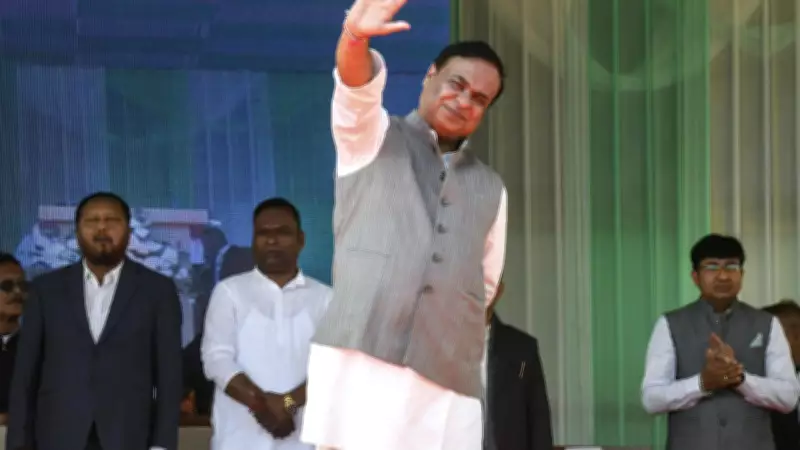
Assam Chief Minister Himanta Biswa Sarma has firmly refused to retract his contentious statements regarding "Miya Muslims" following severe criticism from opposition parties. On Thursday, Sarma clarified that his use of the term "Miyan" specifically refers to illegal Muslim migrants from Bangladesh, not to any religious community or Indian citizens.
Clarification Amid Growing Controversy
In a detailed social media post on platform X, the chief minister defended his position by referencing observations from the Supreme Court of India. Sarma emphasized that the issue of illegal migration represents a grave and persistent challenge that Assam has confronted for decades.
"Those who are attacking me for my remarks on 'Miyan'—a word used in Assam in the context of Bangladeshi Muslim illegal migration—should pause and read what the Supreme Court of India itself has said about Assam," Sarma stated. "This is not my language, not my imagination, and not political exaggeration."

Supreme Court Observations Cited
The chief minister shared a Supreme Court observation that warned about the demographic changes in Assam's strategic districts. The court had noted that "the silent and invidious demographic invasion of Assam may result in the loss of the geostrategically vital districts of lower Assam."
The observation further stated that "the influx of illegal migrants is turning these districts into a Muslim majority region" and cautioned that "it will then only be a matter of time when a demand for their merger with Bangladesh may be made." The court warned that such developments could sever Northeast India from the mainland and result in the loss of valuable natural resources.
Chief Minister's Stated Intentions
Sarma clarified that his administration's efforts are focused on protecting Assam's identity, security, and future rather than targeting any religious group. "Our effort is not against any religion or any Indian citizen. Our effort is to protect Assam's identity, security, and future, exactly as the Supreme Court cautioned the nation to do," he asserted. "Ignoring that warning would be the real injustice—to Assam and to India."
Original Controversial Statements
The controversy erupted on Wednesday when Sarma made provocative remarks about encouraging trouble for "Miya Muslims" to drive them out of Assam. In his statements, the chief minister had said, "Trouble the Miyan Muslims by any means. If they face trouble, they will go from Assam. If I want to give trouble to Miya, I go at 12 am. It's not an issue. We are directly against the Miya Muslims."
He further added, "We are not hiding anything; we directly say that we are against Miyans. Earlier, people feared that notices would be served against them. Now, I encourage everyone to give trouble to Miyan." These comments have sparked widespread outrage across the election-bound northeastern state.
Opposition Condemns Remarks
Opposition leaders have strongly criticized Sarma's statements, warning that such rhetoric could severely damage social harmony in the region. Congress leader Udit Raj expressed concern that the chief minister's remarks could potentially lead to civil unrest.
"Congress neither works for Bengali Muslims nor for Bengali Hindus. Congress views everyone as a citizen," Raj told news agency IANS. "It is good that what was once done covertly, Himanta Biswa Sarma has now openly stated."
CPI(M) Leader's Response
CPI(M) Member of Parliament Amraram also condemned the comments, accusing the Assam government of using administrative measures to marginalize vulnerable communities. "This is what the chief minister always does. In the name of SIR, votes are being taken away from Dalits, minorities, SCs, and STs," he stated.
Amraram emphasized that "all of these people are citizens of this country, whether Muslim, Hindu, Sikh, Christian, or Buddhist." He added, "Creating hatred against them, I believe, is a betrayal of the country, its Constitution, and its unity."

Broader Context and Implications
The controversy emerges at a sensitive political juncture as Assam prepares for upcoming elections. The debate over illegal migration has been a longstanding and contentious issue in the state, with significant implications for:
- Demographic patterns and cultural identity
- Land rights and resource allocation
- Political representation and electoral dynamics
- Inter-community relations and social cohesion
Sarma's remarks have reignited discussions about how political leaders should address complex migration issues while maintaining constitutional values and social harmony. The chief minister's decision to stand by his statements despite opposition criticism indicates his determination to keep illegal migration at the forefront of Assam's political discourse.