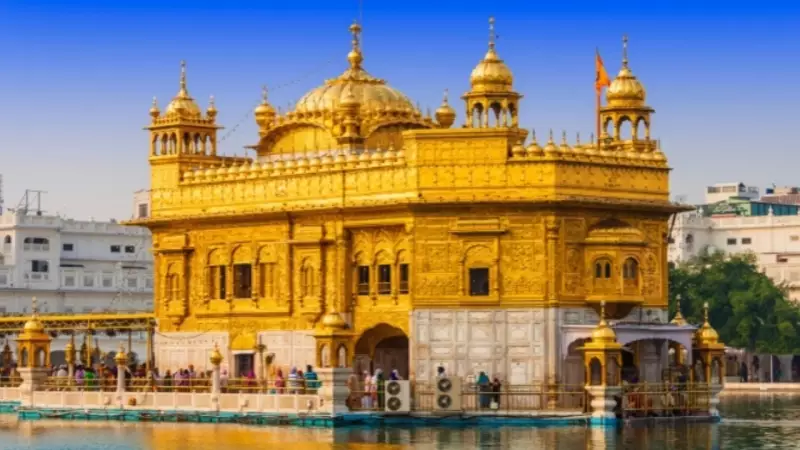
The Punjab government's recent declaration of Amritsar's historic walled city as a holy city has set the stage for a monumental urban transformation. However, the district administration now confronts the formidable task of translating this vision into reality without disrupting the lives of residents, pilgrims, and the local business community.
The Daunting List of Civic Challenges
Transforming the area into a place that is holy in both spirit and daily practice requires tackling deep-rooted civic and law-and-order problems. A primary concern is the pervasive issue of construction debris and general waste clogging the narrow lanes, which hinders movement and creates unhygienic conditions. Compounding this is the serious menace of stray dogs around religious sites and markets, raising alarms about public safety and hygiene.
Traffic congestion remains a persistent headache, fueled by narrow roads, heavy vehicle flow, and unregulated e-rickshaws and delivery vans. This leads to frequent gridlock, especially during peak pilgrimage times. Beyond physical cleanliness, authorities must also curb immoral and illegal activities reported in some lodgings to protect the area's sanctity. Security for the large influx of visitors demands enhanced policing, CCTV networks, and rapid response systems.

Stakeholders Envision a Holistic Transformation
Dr. Manik Mahajan, a senior healthcare professional and civic reformer, emphasizes that a true holy city embodies cleanliness, discipline, and compassion. He lists essential ingredients as hygiene, peaceful surroundings, ethical conduct, safety, orderly traffic, care for animals and heritage, and collective civic responsibility. He expressed hope that visitors would eventually experience this nurturing environment for spiritual and social harmony.
Deputy Commissioner Dalwinderjit Singh stated that the administration will begin deliberations with all stakeholders, including the hotel industry. Every department has been directed to review issues within their domain, prepare detailed lists, and suggest concrete corrective measures. He stressed that coordinated efforts and stakeholder cooperation are crucial to achieving this transformation without public hardship.
Cleanliness Drive and Tourism Prospects
Mandeep Singh, a Municipal Councillor who has launched a cleanliness drive, believes this initiative can set a national example. He argues that successfully turning the walled city into a holy city will not only improve sanitation and restore its spiritual essence but also significantly boost tourist and pilgrim footfall. Visitors, he hopes, would take back valuable lessons in civic responsibility.
The administration's roadmap includes addressing additional complications like encroachments, noise pollution, unhygienic food practices, and inadequate public sanitation. The path to creating a genuinely holy Amritsar is complex, requiring sustained effort, rigorous enforcement, and community participation to balance spiritual aspirations with practical urban governance.