Amit Shah Outlines BJP's 2026 West Bengal Electoral Strategy
Union Home Minister Amit Shah has publicly articulated the Bharatiya Janata Party's (BJP) revised electoral objective for the upcoming West Bengal Assembly elections in 2026. During a significant political event, Shah announced that the party is aiming to secure 170 seats in the state legislature, framing this target as a strategic pathway to challenge the incumbent Trinamool Congress (TMC) government led by Chief Minister Mamata Banerjee.
High-Octane Roadshow Marks Nomination Filing
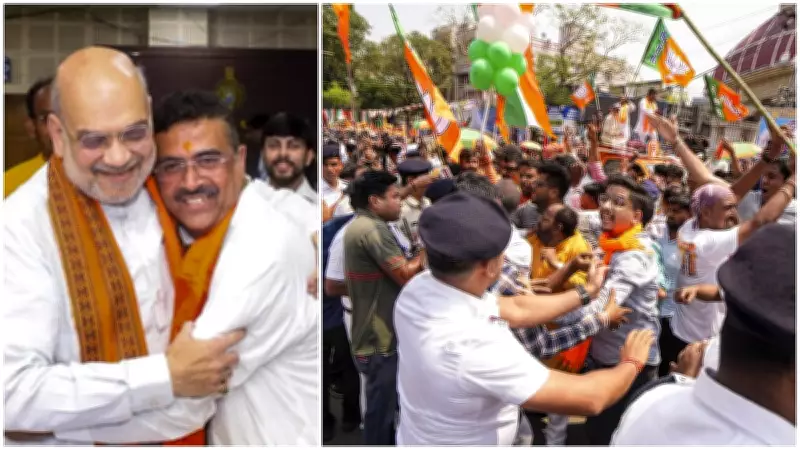
The declaration was made amidst a vibrant and energetic roadshow organized by Shah, which served as the backdrop for the filing of nomination papers by BJP heavyweight Suvendu Adhikari. Adhikari, a prominent figure in West Bengal politics, is contesting from the Bhabanipur constituency, directly pitting him against Chief Minister Mamata Banerjee, who represents this seat. This move underscores the BJP's aggressive campaign strategy to confront the TMC leadership head-on in key battlegrounds.
The roadshow, characterized by large crowds and fervent support, highlighted the BJP's concerted efforts to mobilize its base and appeal to voters ahead of the critical 2026 polls. Shah's active participation in this event signals the central leadership's deep involvement in West Bengal's political landscape, emphasizing the state's importance in the national political arena.

Strategic Implications of the 170-Seat Target
By setting a specific goal of 170 seats, Amit Shah has provided a clear numerical benchmark for the BJP's campaign, which analysts interpret as a pragmatic adjustment from earlier, more ambitious projections. This target represents a substantial portion of the West Bengal Legislative Assembly's total 294 seats, requiring the party to make significant inroads beyond its current foothold.
Political observers note that this revised aim reflects a calculated approach to gradually erode the TMC's dominance, rather than an immediate sweep. Shah's statement implicitly acknowledges the challenges posed by Mamata Banerjee's strong regional appeal and the TMC's established organizational network across the state.
The BJP's strategy appears to focus on consolidating gains from previous elections, where it emerged as the principal opposition, and expanding its influence in constituencies where it has shown potential. The roadshow for Suvendu Adhikari exemplifies this tactic, targeting a high-profile contest to galvanize party workers and attract media attention.
Broader Political Context and Future Outlook
West Bengal has been a focal point of intense political rivalry in recent years, with the BJP making notable strides in the 2021 Assembly elections by increasing its seat count significantly. The 2026 elections are poised to be a crucial test for both parties, shaping the state's governance and influencing national politics.
Amit Shah's involvement and the nomination of Suvendu Adhikari against Mamata Banerjee signal the BJP's commitment to a robust, leader-centric campaign. As the election cycle progresses, stakeholders will closely monitor developments, including voter sentiment, alliance dynamics, and policy debates.
This early positioning by the BJP sets the stage for a highly competitive electoral battle, with implications for regional stability and democratic processes in one of India's most politically vibrant states.