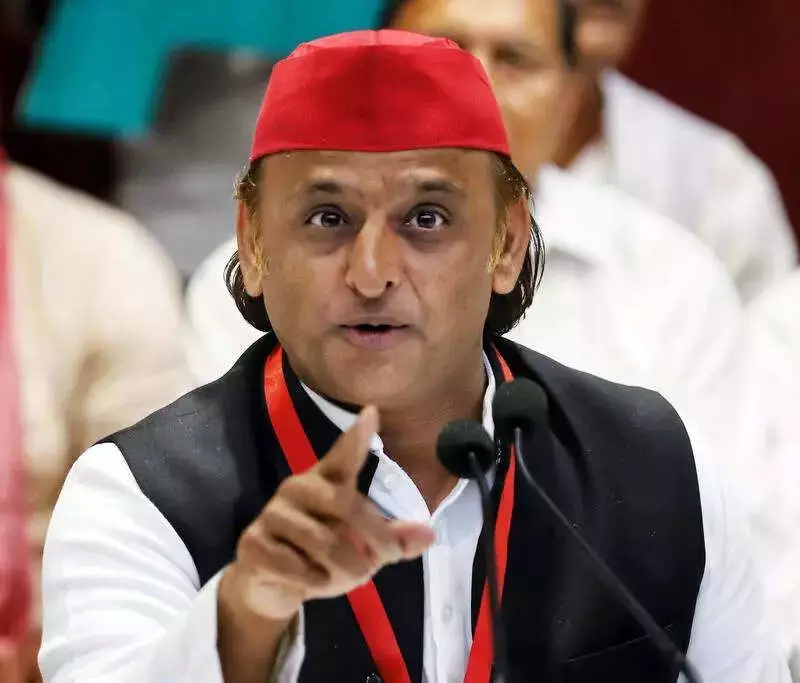
Samajwadi Party president Akhilesh Yadav launched a scathing attack on the Uttar Pradesh government, alleging that a massive, multi-crore codeine-based cough syrup syndicate flourished under the direct patronage of local mafia dons and enjoyed protection from powerful political and bureaucratic figures within the state.
A Racket with National and International Reach
The former Chief Minister asserted that this entrenched protection was the primary reason the illicit network operated without hindrance. The syndicate's operations spread far beyond Uttar Pradesh's borders, reaching Bihar, West Bengal, Madhya Pradesh, Rajasthan, and even extending into Nepal, Bangladesh, and South Africa. Yadav framed the issue not as an isolated scandal but as a rapidly escalating multi-state and multi-country narcotics racket with deep-rooted political and administrative connections.
He claimed the banned syrup has already resulted in the loss of numerous innocent lives. Despite this grave toll, several individuals allegedly close to the Chief Minister and certain government officials were reported to be involved in the trade. "In Uttar Pradesh, a ‘one district, one mafia' economy is flourishing," Yadav charged, adding a pointed remark that the Prime Minister's parliamentary constituency, Varanasi, is directly linked to the case, with 38 FIRs already registered there.
Allegations of Inaction and Caste-Based Mafia Control
Citing a specific tragedy, Akhilesh Yadav referred to the death of Central Bar Association vice-president Raja Anand Jyoti Singh in Varanasi a year ago, allegedly after consuming the same illicit cough syrup. He noted that while Singh's wife, Bharti Singh, lodged a complaint, no consequential action was taken.
The SP chief further alleged that mafia groups belonging to a particular caste were running this illegal trade in the region, amassing crores in black money. "There is no sign of ‘zero tolerance' or bulldozer action here," he stated, asserting that the trade thrived across districts including Varanasi, Jaunpur, Chandauli, Bhadohi, Ghazipur, and Azamgarh under a veil of political protection.
ED Probe Points to High-Level Political Rivalry
Yadav interpreted the recent entry of the Enforcement Directorate into the investigation as a sign that "the second most powerful leader in the ruling establishment" had taken an interest. He suggested this intervention stemmed from a rivalry between this central leader and a strongman from a neighbouring district.
According to his allegations, preliminary findings indicate that the alleged racket kingpin, Shubham, partnered with relatives of this strongman and invested nearly ₹84 crore in the narcotics trade. Yadav also claimed that a disciple of another Varanasi-based strongman accepted large sums of money under the guise of operating a legitimate business.
Concluding his allegations, the Samajwadi Party chief demanded that the case be transferred to the Central Bureau of Investigation. He insisted that only an investigation conducted "without bias or political shielding" would expose the several "white-collar faces" behind the sprawling syndicate.