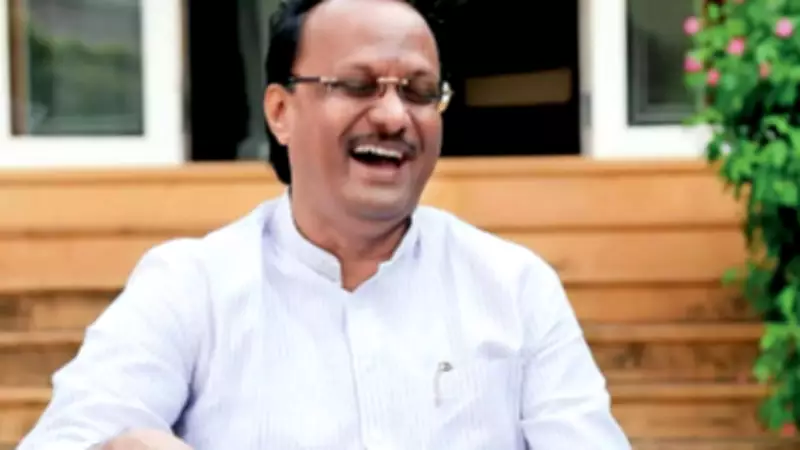
Ajit Pawar stands as one of Maharashtra's most formidable political figures, a leader who has consistently evoked a complex mix of deep respect and cautious apprehension among the populace. His adoration was never granted lightly; it had to be earned through decades of political maneuvering and grassroots connection. Once secured, however, his place in the public consciousness became enduring, weathering storms of controversy and electoral fluctuations with remarkable resilience.
The Early Years and Political Lineage
Born on July 22, 1959, in Deolali Pravara within Ahmednagar district, Ajit Pawar was immersed in politics from childhood. He grew up under the towering shadow of his uncle, Sharad Pawar, a Maratha stalwart and mass leader who was already shaping state politics while Ajit was learning the intricate dynamics of power. His education journey saw primary schooling in Baramati, followed by studies at Vinchem School in Girgaon, Mumbai. After facing a setback by failing in one subject during Standard X, he returned to Baramati for schooling, later attending Shahu College in Kolhapur where he completed SYBCom but quit in his final year.
On December 30, 1985, he married Sunetra, with whom he has two sons. His electoral prowess was evident early on, winning a Lok Sabha seat in 1991 by a massive margin of 3.36 lakh votes, and he went on to present the state budget an impressive 18 times during his career.

Controversies and Unforced Errors
Ajit Pawar's career has been punctuated by controversial remarks that sparked public outrage. During the 2013 drought protests, he infamously stated, "If there is no water in the dam, how can we release it? Should we urinate into it? If there is no water to drink, even urination is not possible", a comment for which he later apologized. In the 2024 election campaign, he warned villagers, "Development funds would be cut off if you do not vote for NCP", highlighting his blunt, no-nonsense approach.
More recently, in 2025, he faced allegations of threatening a woman IPS officer over sand mining issues, though he has denied any interference. These incidents underscore the turbulent aspects of his political journey.
Rise, Power, and Turning Points
Political Timeline and Key Milestones
Ajit Pawar's political ascent began in the late 1970s, and his career is marked by strategic shifts and unwavering influence:

- 1978–80: Entered public life through student and youth politics, laying the groundwork for his future.
- 1982: Elected to the local cooperative society board, an early step in building his base.
- 1991: Entered the Lok Sabha but resigned to allow his uncle Sharad Pawar to return to Parliament, shifting focus to state politics.
- 1991: Won the Baramati assembly seat, which he held for eight consecutive terms, becoming chairman of Pune District Cooperative Bank and a cabinet minister.
- 1995: Strengthened his grip on western Maharashtra by controlling cooperative networks.
- 1999: Became a founding member of the NCP and served as irrigation minister, with additional portfolios in subsequent years.
- 2009: Appointed as Pune's district guardian minister and began his first term as deputy chief minister.
- 2010–2014: Held finance and planning portfolios, consolidating his power.
- September 2021: Resigned from all portfolios amid irrigation scam allegations but was reinstated weeks later.
- November 2019: Joined BJP's Devendra Fadnavis in a surprise alliance, sworn in as deputy CM in a government that collapsed within 80 hours.
- December 2019: Returned as deputy CM under the Maha Vikas Aghadi (MVA) alliance, serving as finance minister until 2022.
- December 2022: Became leader of the opposition.
- July 2023: Led a vertical split in the NCP, joining the BJP–Shiv Sena government.
- 2023: Sworn in again as deputy CM with finance and energy portfolios.
- November 2024: Led the NCP to victory in four seats in the assembly polls.
- November 2025: Asserted commitment to Phule–Ambedkar ideology despite sharing power with BJP, and faced renewed scrutiny over an alleged Pune land deal involving his son, which he denied.
The Unfulfilled Ambition
Despite holding the deputy chief minister's post six times and controlling crucial departments like finance and irrigation, Ajit Pawar has never fully crossed the final threshold to the chief minister's chair. This remains his unfulfilled dream, a testament to the complex power dynamics within Maharashtra politics. His ability to navigate challenges, from electoral lows to coalition shifts, showcases his political acumen, yet the top position has eluded him, adding a layer of intrigue to his storied career.
Throughout his journey, Ajit Pawar has demonstrated a rare blend of resilience and strategic foresight, making him a pivotal figure in shaping Maharashtra's political landscape. His legacy continues to evolve, marked by both admiration and controversy, as he remains a key player in the state's governance.