Ajit Pawar's Final Constitutional Platform in Nagpur Winter Session
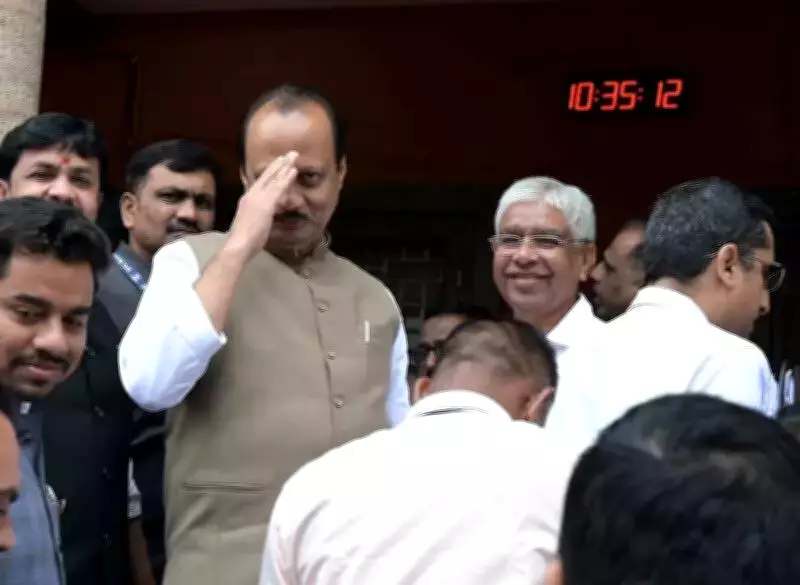
As all 288 members of the Maharashtra Legislative Assembly gathered in Nagpur for the December Winter Session, they listened attentively to Finance Minister Ajit Pawar's detailed reply on supplementary demands. Few could have imagined that this session would mark Pawar's final appearance in a constitutional forum, creating a significant moment in the state's political history.
Historic Supplementary Demands Presentation
The address, delivered while piloting supplementary demands worth ₹75,286 crore, reflected the essence of Pawar's extensive parliamentary career. It showcased his characteristic candour over caution, his ability to maintain humour under pressure, and his deep command over complex financial numbers. The scale of these demands represented one of the highest amounts ever placed before the House during a winter session, drawing sharp reactions from both ruling and opposition benches regarding the state's escalating debt burden.
As finance minister, Pawar was widely anticipated to present the state budget later in the year. Preparations were actively underway for this responsibility, but circumstances ultimately denied him another opportunity to address the Assembly in an official capacity. While Pawar remained politically active following the winter session, participating in rallies and public meetings, the Nagpur Assembly became his last constitutional platform—the final forum where he spoke as a member of the legislature within the formal framework of the Constitution.

Unprecedented Financial Transparency
Pawar made no attempt to soften uncomfortable facts during his address. He openly acknowledged that supplementary demands had never before crossed the ₹75,000-crore mark during any winter session. He noted that multiple budgets and financial demands had been presented over decades by himself and by leaders across the political aisle. Legislators recall that this admission came without defensiveness, establishing a tone of rare honesty in fiscal debates that has since become memorable.
The finance minister then provided comprehensive context behind the substantial numbers, pointing to successive natural calamities and a prolonged agrarian crisis that compelled government intervention throughout the year. His address demonstrated careful preparation, with Pawar moving fluidly between policy rationale and financial detail, explaining why extraordinary circumstances necessitated extraordinary spending measures.
Balancing Fiscal Responsibility
Even while justifying the substantial outlay, Pawar struck a crucial note of fiscal restraint. He cautioned that the government needed to closely monitor year-end expenditure and maintain strict economic discipline, while simultaneously working to expand revenue sources for sustainable development. This balanced approach highlighted his commitment to responsible financial management amid challenging circumstances.
Pawar used this platform to emphasize the contradictions inherent in political expectations. He pointed out that while some members demanded greater public spending and additional welfare measures, the same voices expressed concern over the state's nearly ₹9 lakh crore debt burden. "On one hand, there is worry about the loan, and on the other, there is a demand to borrow another ₹2 lakh crore and spend more. This is not how it works," Pawar stated during his address, highlighting the practical challenges of fiscal governance.
Cross-Party Recognition and Legacy
The speech garnered rare cross-party appreciation, with Congress leader Nana Patole publicly acknowledging Pawar's work ethic on the floor of the House. Patole observed that Pawar was a finance minister who generally stood by his commitments—an uncommon endorsement in Maharashtra's politically charged legislative environment.

With the state budget meeting scheduled to begin from February 6, Pawar remained closely involved in financial preparations until the end. In hindsight, his final address in Nagpur represents more than a routine legislative defence. It stands as a quiet summation of his legislative persona—direct, thoroughly informed, occasionally disarming, and firmly anchored in fiscal realism. This moment has left an enduring impression that the House now remembers with a distinct sense of loss, marking the conclusion of a significant chapter in Maharashtra's legislative history.