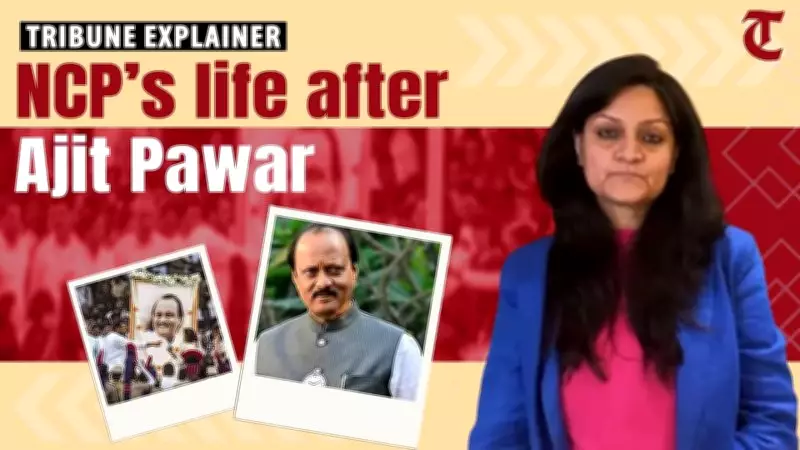
Will Ajit Pawar's Untimely Death Unite the NCP? Political Speculation Intensifies
Political circles across India, particularly in Maharashtra, are currently abuzz with intense speculation following reports and discussions about the potential untimely death of senior leader Ajit Pawar. This hypothetical scenario has sparked a significant debate among analysts, party members, and political observers regarding its possible impact on the fractured Nationalist Congress Party (NCP). The question dominating conversations is whether such a tragic event could serve as a catalyst to reunite the party, which has experienced internal divisions and splits in recent years.
The Current State of the NCP and Its Divisions
The NCP, founded by veteran politician Sharad Pawar, has been navigating through turbulent waters marked by factionalism and leadership disputes. Ajit Pawar, as a prominent figure and nephew of Sharad Pawar, has been at the center of many of these conflicts, often seen as a key player in the party's internal dynamics. His role has sometimes been viewed as both a unifying and divisive force, depending on the political climate and alliances. The party's unity has been tested on multiple occasions, leading to public spats and realignments that have weakened its collective strength in Maharashtra's competitive political landscape.
Potential Political Ramifications and Unity Prospects
In the event of Ajit Pawar's untimely death, political analysts suggest that the NCP might experience a moment of introspection and solidarity. Historically, tragedies and losses within political families or parties have often led to temporary or permanent reunions, as members set aside differences to honor the deceased and consolidate their position. For the NCP, this could mean a renewed focus on common goals, such as strengthening the party's base in Maharashtra, addressing voter concerns, and presenting a united front against rivals like the BJP and Shiv Sena. However, some experts caution that deep-seated issues and personal ambitions among remaining leaders could still hinder full reconciliation, making the path to unity uncertain and complex.

Broader Implications for Maharashtra and National Politics
The speculation around Ajit Pawar's death extends beyond the NCP, touching upon broader implications for Maharashtra politics and even national scenarios. As a key state with significant economic and political influence, Maharashtra's stability often reflects on the central government's policies and alliances. A united NCP could alter power equations, potentially forming stronger coalitions or influencing legislative decisions. Moreover, this discussion highlights the fragile nature of political parties in India, where personal loyalties and family ties often play a crucial role in shaping outcomes. It serves as a reminder of how unforeseen events can reshape political landscapes, prompting stakeholders to reassess strategies and alliances in real-time.
In summary, while the notion of Ajit Pawar's untimely death remains speculative, it has ignited important conversations about unity within the NCP and its future trajectory. As political observers continue to monitor developments, the focus remains on whether such an event could indeed bridge divides or if underlying conflicts will persist, shaping the party's role in India's democratic framework.