A decision by the Karnataka government to rehabilitate individuals evicted from encroached land in Bengaluru has triggered a wave of creative and sarcastic online protest, with citizens using artificial intelligence to stage a virtual camping rebellion across the city's iconic landmarks.
The Spark: Flats for Encroachers
The controversy stems from a December 20 encroachment eviction drive conducted by the Greater Bengaluru Authority (GBA) at Kogilu, near Yelahanka in north Bengaluru. The drive aimed to reclaim government land and involved the demolition of approximately 400 unauthorised houses. In what was described as a "humanitarian" move, the Siddaramaiah-led state government later announced that the displaced families would be allotted government flats in the city, with reports valuing these flats at around Rs 11.2 lakh each.
#MyTentsMyRight: The Digital Campground Erupts
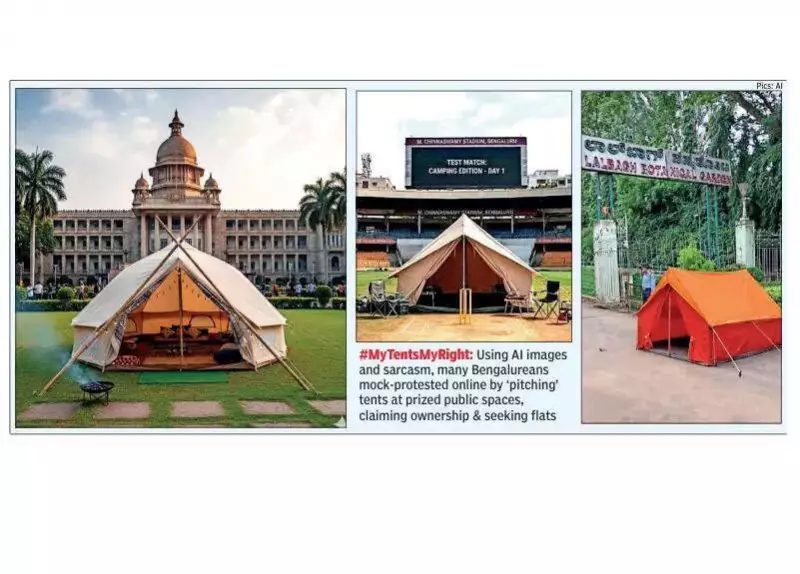
Soon after the government justified its rehabilitation measures, social media platforms transformed into a virtual protest ground. Armed with AI image-generation tools and heavy sarcasm, Bengalureans began digitally "pitching" tents at some of the city's most prized public spaces, humorously claiming ownership and demanding equal treatment under the hashtag #MyTentsMyRight.

AI-generated images of tents mushroomed outside iconic landmarks including the state secretariat Vidhana Soudha, the historic Lalbagh Botanical Garden, and the Chinnaswamy Stadium. The core argument from the online crowd was straightforward: if illegally pitched tents on government land can eventually translate into free flats on humanitarian grounds, then every citizen deserves a similar opportunity.
One netizen set up an AI tent near Bellandur Lake in the tech corridor and issued a mock legal ultimatum: "If you don't give me this, I will go to court." Another user targeted the seat of power, placing a tent right outside Vidhana Soudha with a post that read: "Waiting to be relocated for free under the Rajiv Gandhi Housing Scheme by Karnataka govt to a good apartment in Bangalore after my illegally put up tent is demolished in front of Vidhana Soudha."
Anger Beneath the Humour
Behind the layer of humour, the protest revealed simmering public anger. Many users questioned the fairness of a system where taxpayers who diligently follow rules, pay home loan EMIs, and navigate complex housing regulations feel sidelined, while illegal encroachments are retrospectively rewarded. The protest also alluded to alleged political pressure influencing the decision, including from politicians in the neighbouring state of Kerala, where elections are due.
In this satirical narrative, scenic public assets were suddenly rebranded as "potential housing sites," with proud "tent owners" demanding their temporary nylon estates be acknowledged as legitimate claims for future government housing.
The trend quickly crossed Bengaluru's borders, with AI tents appearing outside the Mysuru Palace and the Kalaburagi Mini Vidhana Soudha, suggesting the satirical "tent-to-flat" model could potentially go statewide.
The Political Backdrop of Kogilu
The initial eviction drive had already snowballed into a major political controversy. Politicians from poll-bound Kerala accused the Karnataka government of executing "anti-minority politics" and enabling a "brutal normalisation of bulldozer raj." The government's subsequent rehabilitation offer was seen by its critics as a response to this pressure, further fueling the public's cynical response online.
This unique digital protest underscores a growing public sentiment against perceived inequities in policy implementation and raises critical questions about the precedent set by rewarding encroachments, however humanitarian the intent may be.