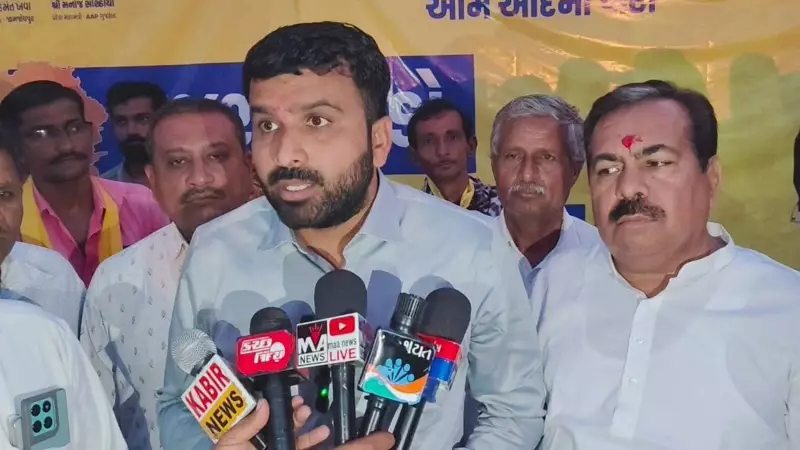
In a significant development that has stirred Gujarat's political landscape, the Ahmedabad Police has registered two separate First Information Reports (FIRs) against Raju Karpada, the social media coordinator for the Aam Aadmi Party's Gujarat unit. The cases have ignited a fresh political firestorm in the state, with allegations of targeting opposition voices.
The Dual FIRs: What Do They Allege?
According to police officials, the first FIR was filed at the Sola High Court police station under multiple sections of the Indian Penal Code, including:
- Section 469 (forgery for purpose of harming reputation)
- Section 501 (printing or engraving matter known to be defamatory)
- Section 505(2) (statements creating or promoting enmity, hatred or ill-will between classes)
The second case was registered at the Cyber Crime Police Station, adding another layer to the legal challenges facing the AAP leader.

The Controversial Content
Police sources indicate that the FIRs stem from allegedly objectionable social media posts that targeted prominent political figures including Prime Minister Narendra Modi and the ruling Bharatiya Janata Party. The posts, which circulated across various platforms, are accused of containing content that could potentially disrupt public harmony and damage political reputations.
"The investigation revealed that Karpada was allegedly involved in creating and disseminating content that could be considered inflammatory and defamatory," stated a senior police official familiar with the case.
Political Reactions and Implications
The timing of these FIRs has raised eyebrows in political circles, coming amid heightened political activity in Gujarat. AAP supporters have cried foul, alleging that the cases represent a systematic attempt to suppress opposition voices in the state.
Meanwhile, law enforcement authorities maintain that the action is purely based on legal violations and follows proper procedural protocols. "We are simply following the law as it exists. Any content that violates established legal provisions will face appropriate action," the official added.
Broader Context: Social Media and Political Discourse
This case highlights the increasingly contentious relationship between social media political discourse and legal boundaries in India. As political parties increasingly rely on digital platforms for campaigning and messaging, the line between robust political criticism and legally objectionable content continues to be tested.
The development also underscores the growing importance of social media coordinators in modern political machinery, positions that now carry significant legal responsibilities and potential risks.
As the legal process unfolds, all eyes remain on how this case will impact the political dynamics in Gujarat and set precedents for similar cases involving social media political content across the country.