Mass Disenfranchisement in West Bengal as 63 Lakh Voters Barred from Polls
In an unprecedented move that has sparked widespread concern, approximately 63 lakh voters across West Bengal have been effectively disenfranchised ahead of the upcoming election season. These individuals, many of whom have been exercising their democratic right since the era of paper ballots, will be forced to stay away from polling stations for the first time in their voting history.
The Mechanism Behind the Voter Purge
This mass exclusion stems from the Election Commission's Special Intensive Revision (SIR) of the electoral roll, a process that has systematically stripped these citizens of their voting rights. The SIR exercise has categorized numerous legitimate voters as either "dead" or "deleted," rendering them ineligible to press the button on electronic voting machines (EVMs) this election cycle.
As polling dates are announced, these disenfranchised voters face the painful reality of watching their neighbors and family members head to booths while they remain confined to their homes. The emotional and psychological impact of this sudden deprivation of a fundamental democratic right is profound and far-reaching.
Voices from the Disenfranchised
Tripti Dubey, a deleted voter from the Bhowanipore assembly constituency, expressed her deep distress: "The election dates hold no meaning for me now. The SIR exercise did not recognize me as a legitimate voter, even though I have been casting my ballot in this city since the 1980s. While my family members will go to the booth, I will be left behind. I have no words to console myself."
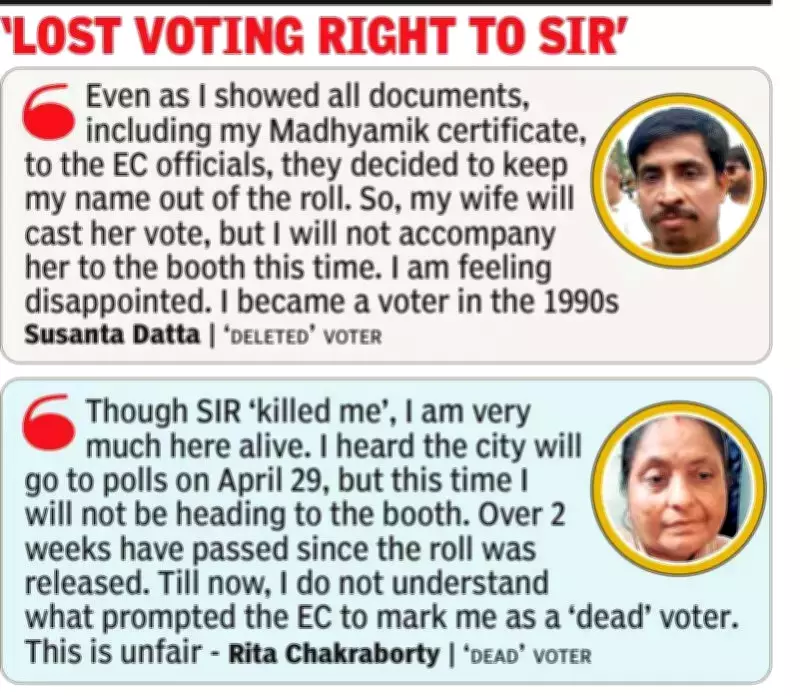
Rita Chakraborty, labeled as a "dead" voter in Alipore, highlighted the absurdity of her situation: "Though the SIR process 'killed me,' I am very much alive in the real world. I heard the city will vote on April 29, but I will not be heading to the polling booth. Over two weeks have passed since the electoral roll was released, and I still cannot comprehend why the EC omitted my name and marked me as deceased. Is there no accountability for those responsible for sabotaging people's voting rights in this manner? I was not even called for a hearing."
Systemic Failures and Personal Anguish
Many affected voters reported attending hearings before EC officials, where they presented all required documents, only to still fall victim to deletions. Dipali Burman, an elector from Tollygunge, shared her frustration: "Ahead of the Assembly polls, this is mental torture. Despite having all my documents in order, I will be prevented from casting my vote this year. Even in 2002, when the SIR was conducted, my name remained on the electoral roll and I voted. This year will be an exception, and I do not know if I will ever regain my voting right."
Susanta Datta, a resident of Barrackpore, is struggling to accept the shock of losing his voting right: "I showed all my documents, including my Madhyamik certificate, to EC officials during the hearing, yet they decided to exclude my name. My wife will vote as usual, but I cannot accompany her. If she takes my bike to the booth, I will have to wait outside. I became a voter in the 1990s and never imagined my right would be snatched away. I must call this a deliberate deprivation of my voting right."
Impact Across Generations
The disenfranchisement has affected voters of all ages, including younger citizens eager to participate in the democratic process. Pintu Dey, a resident of Sodepur, described consoling her daughter after the polling dates were announced: "She is crying because her name was omitted from the roll. I took her to the hearing centre, where she queued up and submitted all documents requested by EC officials. Despite this, her name was struck off. After the 2021 poll, she could have voted this time, too."
This widespread issue raises critical questions about the transparency and fairness of the SIR process, as well as the broader implications for democratic participation in West Bengal. With millions of voters suddenly rendered voiceless, the integrity of the upcoming elections hangs in the balance, calling for urgent scrutiny and corrective measures.