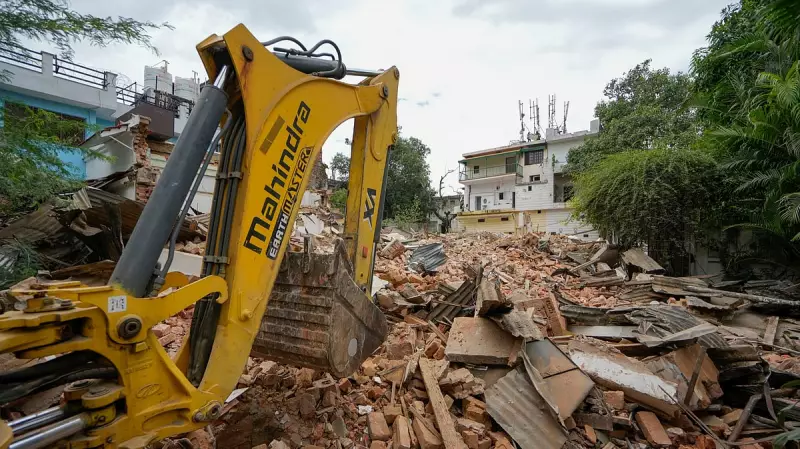
In a significant enforcement action, civic authorities in Davangere, Karnataka, have demolished sixteen residential structures that were illegally constructed on government land. The demolition drive, which took place on Tuesday, targeted properties situated near the railway track in the city's Ashok Nagar area.
High Court Order Triggers Action
The operation was executed by the Bruhat Bengaluru Mahanagara Palike (BBMP) following a directive from the Karnataka High Court. The court had issued specific orders for the removal of all encroachments on the identified government land parcel. Local officials stated that despite prior notices, the occupants had failed to vacate the premises, leaving the authorities with no choice but to proceed with the demolition.
The demolished houses were located on a valuable piece of land belonging to the government, directly adjacent to the railway line. This location not only violated land ownership laws but also raised significant safety and security concerns for the railway infrastructure.

Operation and On-Ground Details
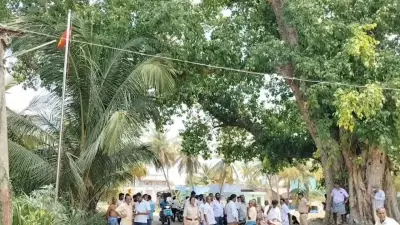
On the day of the operation, a large team comprising BBMP officials, police personnel, and workers arrived at the site with heavy machinery, including excavators. The process of tearing down the illegally built houses continued throughout the day. The presence of police ensured the action was carried out smoothly and without any major law and order issues.
Residents of the area reported that the occupants had been living in these houses for several years. The sudden enforcement of the court order has now rendered multiple families homeless, highlighting the human cost of such encroachment disputes. While the law was upheld, the incident underscores the complex issue of housing and land use in urban areas.
Broader Implications and Official Stance
This demolition drive is part of a wider crackdown on illegal constructions and land encroachments across Karnataka. Government agencies are under increasing pressure to reclaim public land, especially plots that are crucial for infrastructure projects or pose safety risks.
Officials reiterated that the action was strictly based on the rule of law and the High Court's instruction. They emphasized that allowing such encroachments sets a dangerous precedent and compromises planned urban development. The cleared land is now expected to be secured and used for its intended public purpose, potentially related to railway safety or other civic amenities.
The event in Davangere serves as a stark reminder for citizens to verify land titles and approvals before purchasing property or beginning construction. It also signals the administration's renewed focus on tackling the long-standing problem of land encroachment, which often involves a lengthy legal process before reaching the enforcement stage.