Uttarakhand's Snow-Bound Villages Show Decline Ahead of Digital Census 2027
In a significant demographic shift, four hill districts of Uttarakhand — Pithoragarh, Uttarkashi, Chamoli, and Rudraprayag — have witnessed a reduction in the number of snow-bound villages. According to official data, these districts had 150 such villages during the 2011 census, but the count has now dropped to 131. Authorities attribute this change primarily to the impacts of climate change and improvements in regional infrastructure.
This development comes as the state gears up for the upcoming Census 2027, which is set to be conducted in two distinct phases. The first phase, known as the house listing and housing census (HLO), is scheduled to run from April 25 to May 24 of this year. During this period, enumerators will visit households across the region to collect detailed information.
Self-Enumeration: A Digital First for India's Census
Ahead of the HLO phase, a groundbreaking self-enumeration facility will be introduced for the first time in India's census history. Residents can opt to register their details online between April 10 and April 24 through the dedicated portal se.census.gov.in. This initiative marks a major step toward digitizing the country's largest administrative and statistical exercise.

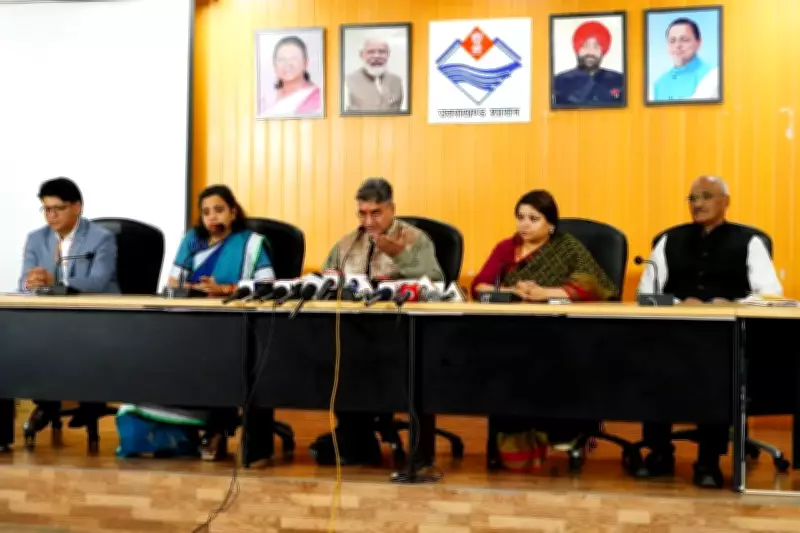
Eva Ashish Srivastava, Director of Census Operations, emphasized that the entire process will be fully digital, with data captured using mobile applications. "This marks the start of the country's largest administrative and statistical exercise," she stated. The census will also gather information on electronic devices owned by households, including mobile phones, tablets, and laptops, reflecting the growing digital penetration in India.
How Self-Enumeration Works
Deepak Kumar, Census Secretary, outlined the self-enumeration procedure. It requires the name of the head of the household and a valid mobile number, with each number restricted to one household only. The process is designed to be efficient, taking approximately 15–20 minutes to complete. Once details such as name and language are verified via OTP, they cannot be altered, ensuring data integrity.
The web-based facility is accessible in 16 regional languages, promoting inclusivity across diverse linguistic groups. All collected data will remain confidential under the Census Act of 1948, protected through advanced encryption and multi-level authentication systems.
Phases and Special Provisions for Remote Areas
During the HLO phase, enumerators will collect detailed information on housing conditions, household amenities, and assets through 33 notified questions. This data will serve as a crucial foundation for policy planning and the implementation of welfare schemes across the state.
The second phase, population enumeration, is slated for February 9 to February 28, 2027, across Uttarakhand. However, special provisions have been made for the 131 snow-bound villages and three urban areas in the four hill districts. In these remote locations, enumeration will occur earlier, from September 11 to September 30, 2026, to accommodate challenging weather conditions and accessibility issues.
Organizational Structure and Historical Context
Officials have appointed district magistrates and municipal commissioners as principal census officers, supported by a trained network of master trainers, field trainers, enumerators, and supervisors. The self-enumeration process will be symbolically inaugurated by the Governor and Chief Minister on April 10.
India's census history dates back to 1872, with the first post-independence census conducted in 1951. The upcoming Census 2027 will be the country's 16th overall and the eighth since independence. Notably, this edition will also include caste-based enumeration, adding a new dimension to the demographic data collection.
The decline in snow-bound villages underscores the broader environmental and infrastructural changes shaping Uttarakhand, while the digital advancements in Census 2027 highlight India's commitment to modernizing its statistical frameworks for better governance and planning.