Supreme Court Demands Accountability as Centre Apologizes for NCERT Textbook Controversy
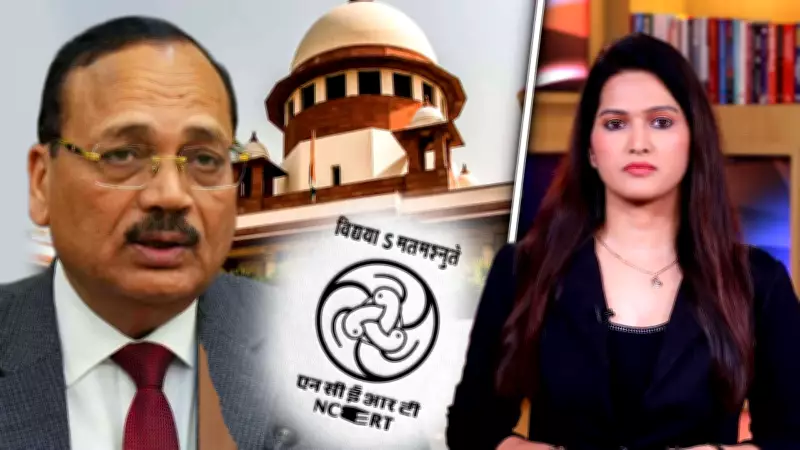
The Indian government has issued a formal apology in the Supreme Court regarding a contentious paragraph in a Class 8 National Council of Educational Research and Training (NCERT) textbook that referenced corruption within the judiciary. This apology, however, did not satisfy the apex court, which responded with a stern demand for accountability and consequences.
Court's Stern Response and Immediate Actions
Chief Justice of India, presiding over the case, made it unequivocally clear that responsibility will be fixed and no individual involved will escape scrutiny. "Heads must roll," the court emphasized, signaling a zero-tolerance approach to the matter. In a swift move, show cause notices have been issued to relevant authorities, and the distribution of the controversial textbook has been immediately halted.
Furthermore, over two lakh copies of the book have been recalled from circulation across the country. This decisive action underscores the gravity with which the court views the incident, transforming what began as a textbook error into a significant institutional issue.

Broader Implications for Institutional Integrity
The controversy extends far beyond a mere paragraph in an educational text. It raises profound questions about institutional integrity and the mechanisms of accountability in India's educational framework. The NCERT, as a premier body responsible for shaping curricula, now faces intense scrutiny over its content review processes.
This incident highlights the critical role of textbooks in molding young minds and the need for rigorous oversight to prevent such lapses. The Supreme Court's intervention underscores the judiciary's commitment to upholding constitutional values and ensuring that educational materials do not undermine public trust in institutions.
Legal and Educational Repercussions
The case has sparked a nationwide debate on the balance between academic freedom and responsible content creation. Legal experts suggest that this could lead to stricter guidelines for textbook publishers and enhanced scrutiny of educational content by regulatory bodies.
In the short term, the recall and investigation are expected to disrupt the academic schedule for many Class 8 students, necessitating alternative arrangements by educational authorities. The long-term effects may include reforms in how NCERT and similar institutions operate, with a greater emphasis on transparency and accountability.
As the Supreme Court continues its proceedings, all eyes are on the next steps in this unfolding drama, which has become a litmus test for institutional accountability in India.