

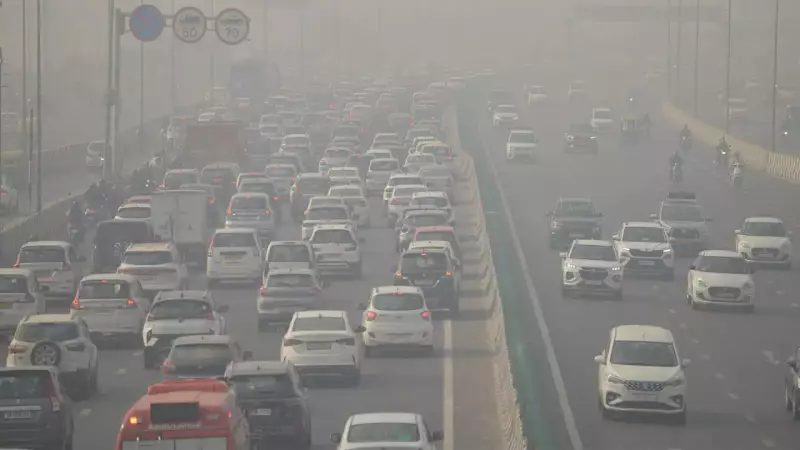
In a significant hearing focused on Delhi's persistent air quality emergency, the Supreme Court of India on Tuesday strongly advocated for a societal shift towards electric vehicles (EVs). The apex court linked the capital's pollution crisis directly to personal transport choices, criticising the culture of car ownership as a status symbol.
Court Calls for Societal Responsibility from the Affluent
Chief Justice of India Surya Kant, presiding over a plea related to air pollution, made pointed observations about the changing social norms around mobility. The CJI remarked that the car has transformed into a status symbol, leading people to save money for vehicles instead of using sustainable options like cycles. He emphasised that the wealthier sections of society must demonstrate greater responsibility.
"The rich people should also sacrifice. Instead of going for high-end vehicles, they should go for good electric vehicles," CJI Surya Kant stated, as per reports. The bench highlighted the need for collective action, moving beyond individual convenience to address the public health emergency.

Criticism of Air Quality Body and Multiple Vehicle Ownership
The court's scrutiny extended to the Commission for Air Quality Management (CAQM), which it accused of "failing in its duty." The criticism came after the CAQM sought a two-month adjournment on a proposal concerning the temporary closure or relocation of toll plazas at Delhi's borders to ease traffic congestion.
The bench, refusing the adjournment request made by Additional Solicitor General Aishwarya Bhati, expressed dissatisfaction with the authority's lack of urgency. "Have you been able to identify the causes of pollution? … By holding a meeting on January 2 and telling us that we will come after two months, that is not acceptable to us," the court observed orally.
During the proceedings, senior advocate Rakesh Dwivedi, appearing in the matter, suggested that curbing the ownership of multiple vehicles could be a viable solution. He also pointed out the considerable influence wielded by the automobile industry, hinting at the complex challenges in implementing systemic change.
Broader Implications for Policy and Public Behaviour
The Supreme Court's strong stance signals a judicial push for more aggressive environmental governance and a change in public mindset. By directly connecting luxury consumption with environmental damage, the court has framed clean air as a matter of social equity. The remarks underscore the need for:
- Accelerated adoption of electric vehicles, especially among those who can afford the transition.
- Re-evaluating urban planning and infrastructure to reduce congestion and pollution hotspots like toll plazas.
- Holding regulatory bodies like the CAQM accountable for timely and decisive action during pollution emergencies.
The hearing reinforces the legal and moral pressure on both authorities and citizens to treat Delhi's toxic air not as an inevitable winter phenomenon but as a man-made crisis requiring immediate and sustained intervention.






