NEET's Role in Medical Admissions Under Scrutiny
The National Eligibility cum Entrance Test (NEET) was introduced a decade ago to standardise medical admissions across India. However, questions are now being raised about whether this single high-stakes examination truly identifies candidates best suited for a career in medicine. Vincent Arockiasamy, in a recent opinion piece, argues that the process invites reassessment: Does NEET select those best prepared for medicine or those best prepared to succeed in a time-pressured exam?
The Original Intent of NEET
Before NEET, medical admissions were governed by multiple state-level and institution-specific entrance tests, leading to inconsistencies and allegations of corruption. The Supreme Court mandated NEET in 2016 to create a common, transparent, and merit-based admission process for all medical and dental colleges in India. Since then, NEET has become the sole gateway for over 1.5 lakh MBBS and BDS seats across the country.
Critique of the Examination Model
A decade later, critics argue that NEET's heavy emphasis on rote memorisation and speed disadvantages students who may possess strong clinical aptitudes but weaker test-taking skills. According to Arockiasamy, the exam's format—multiple-choice questions covering physics, chemistry, and biology—does not assess empathy, communication, or problem-solving abilities essential for medical practice. He notes that "the current system rewards those who can afford expensive coaching, not necessarily those who will make compassionate doctors."

Impact on Student Diversity and Regional Equity
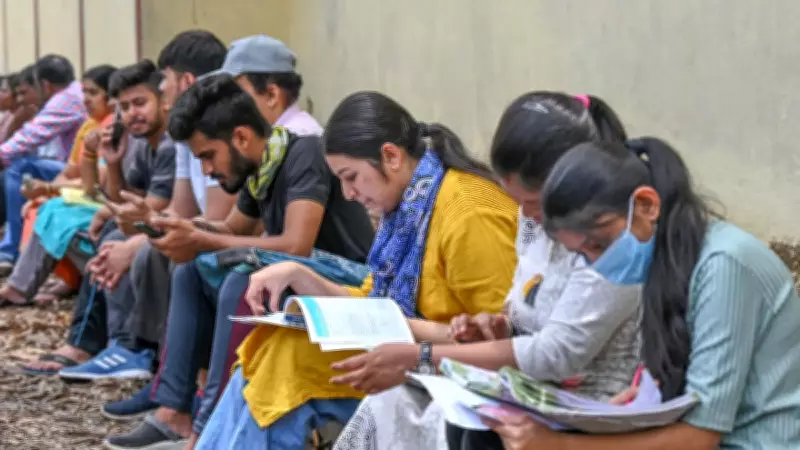
Data from the National Testing Agency indicates that over 90% of NEET candidates enroll in coaching centres, with annual fees ranging from ₹50,000 to ₹2 lakh. This creates a barrier for students from rural and low-income backgrounds. Furthermore, the uniform syllabus fails to account for regional variations in education quality, potentially excluding talented students from under-resourced states. A 2025 study by the Centre for Policy Research found that only 12% of medical seats in top colleges are occupied by students from rural areas, despite rural populations constituting 65% of India's total.
Alternative Approaches to Medical Selection
Several countries have moved beyond single-exam models. In the United States, the Medical College Admission Test (MCAT) is combined with interviews, personal statements, and extracurricular assessments. The United Kingdom uses the UK Clinical Aptitude Test (UKCAT) alongside academic records and interviews. Arockiasamy suggests that India could adopt a multi-pronged approach, incorporating situational judgement tests, interviews, and community service requirements to evaluate non-cognitive skills. He states, "Medical education must prioritise holistic development, and the selection process should reflect that."
Calls for Reform and Government Response
In response to growing criticism, the Ministry of Health and Family Welfare has formed a committee to review NEET's structure. Preliminary recommendations include introducing a percentile-based scoring system to reduce cut-throat competition and adding a separate section on ethical reasoning. However, any changes are unlikely before 2027 due to logistical challenges. Meanwhile, student groups have petitioned for a cap on coaching centre influence and greater transparency in question paper design.
Conclusion: Balancing Standardisation and Suitability
While NEET has successfully standardised medical admissions and reduced corruption, its ability to identify future doctors with the right blend of knowledge, empathy, and resilience remains questionable. As Arockiasamy concludes, "The goal should not be to make the exam harder, but to make it smarter—to assess not just what students know, but who they are." The debate over NEET's future reflects a broader tension between efficiency and equity in India's education system.