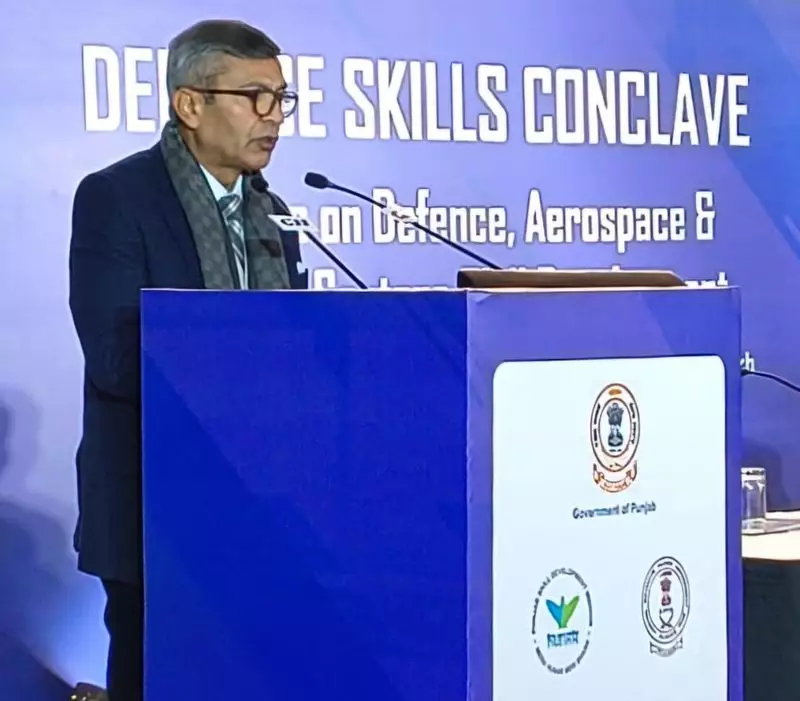
Defence Secretary Giridhar Aramane has identified Punjab as a state with significant potential to create structured pathways for Agniveers, enabling them to transition into the defence industry after their four-year service tenure under the Agnipath scheme. This announcement was made during his visit to the Maharaja Ranjit Singh Armed Forces Preparatory Institute (AFPI) in Mohali.
Punjab's Strategic Role in Agniveer Resettlement
Addressing the gathering, Aramane emphasized that Punjab, with its robust industrial base and historical connection to the armed forces, is uniquely positioned to establish a model for institutional resettlement. The Defence Secretary stated that the state could lead the nation in developing formal channels for Agniveers to find meaningful careers in the defence manufacturing sector once they complete their service. This initiative aims to address concerns about the future of these young soldiers after their short-term engagement.
The Agnipath scheme, which recruits soldiers for a four-year period, has been a topic of national discussion. Aramane's comments highlight a crucial government focus on creating a viable 'second career' for the Agniveers, termed 'Veer Naris', who will return to civilian life with valuable training and discipline.

Industry Collaboration and Future Prospects
Aramane revealed that the government is actively working to connect Agniveers with opportunities in the burgeoning defence industry. He mentioned that the defence industry, currently valued at Rs 1.20 lakh crore, is projected to grow to Rs 3 lakh crore in the next four to five years. This explosive growth is expected to generate a high demand for a skilled and disciplined workforce, a niche that the ex-Agniveers are perfectly suited to fill.
The plan involves creating direct linkages between the armed forces, the defence ministry, and private and public sector defence companies. The goal is to ensure that the skills acquired by Agniveers during their service—such as handling advanced weaponry, logistics, and technical systems—are formally recognized and utilized by the industry. This would not only provide job security to the veterans but also supply the defence sector with a ready pool of trained personnel.
Addressing Concerns and Building Confidence
The Defence Secretary's statements serve to build confidence in the Agnipath scheme by outlining a concrete post-service roadmap. He assured that the government is committed to the welfare of the Agniveers. The proposed institutional pathways from Punjab could include tailored skill-upgradation programs, dedicated job fairs with defence manufacturers, and possibly preferential hiring policies within the defence industrial corridor.
Giridhar Aramane also lauded the Maharaja Ranjit Singh AFPI for its outstanding contribution to preparing young men for leadership roles in the armed forces. The institute's success in nurturing officers for the armed forces was cited as an example of Punjab's deep-rooted commitment to national defence, making it an ideal testing ground for the new resettlement model.
This proactive approach signals a shift towards integrating short-service recruitment with the broader national industrial policy. If successful, the 'Punjab model' for Agniveer resettlement could be replicated across other states, ensuring that the Agnipath scheme becomes a holistic career launchpad that serves both the immediate defence needs of the nation and the long-term professional aspirations of its youth.