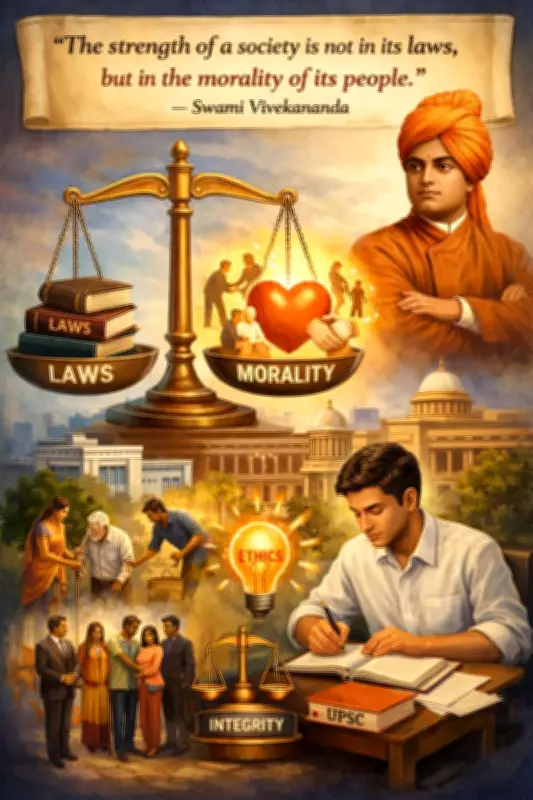
Why Moral Values Matter More Than Laws: Lessons from Swami Vivekananda for a Strong Society
The strength of a society is not in its laws, but in the morality of its people. This profound statement serves as a timeless reminder that no matter how meticulously crafted laws may be, they cannot independently guarantee justice, harmony, or progress. A society truly flourishes when its citizens actively uphold ethical values such as honesty, compassion, and responsibility. In today's increasingly complex governance structures, this idea holds more relevance than ever before.
The Framework of Laws Versus the Force of Morality
Laws provide a necessary framework for order and regulation, establishing boundaries and consequences for actions. However, they are inherently limited in their ability to foster genuine societal well-being. Without a foundation of moral integrity, laws can become hollow, enforced mechanically without inspiring the deeper ethical conduct that sustains communities. Morality, in contrast, acts as the vital force that breathes life into legal systems, guiding individuals to act justly even when no one is watching.
Swami Vivekananda's Teachings on Ethical Character
Swami Vivekananda, a revered spiritual leader and philosopher, emphasized that the true measure of a nation's strength lies in the character of its people. He argued that laws alone cannot cultivate virtues like empathy, integrity, and selflessness. Instead, these qualities must be nurtured through education, personal discipline, and spiritual awareness. Vivekananda's insights highlight that societal progress is not merely about legislative reforms but about fostering an inner transformation that aligns actions with ethical principles.

Relevance in Modern Governance and Civil Services
In contemporary times, where governance involves intricate policies and global challenges, the reliance on moral values becomes crucial. Civil services aspirants, in particular, can draw valuable lessons from this perspective. Preparing for success in public service requires not only knowledge of laws and administration but also a commitment to ethical leadership. Understanding that laws are tools, while morality is the driving spirit, can help future administrators build more resilient and just societies.
Ultimately, Swami Vivekananda's wisdom underscores that a strong society is built on the bedrock of moral values, with laws serving as supportive structures rather than primary pillars. By prioritizing ethical character, we pave the way for sustainable harmony and progress.