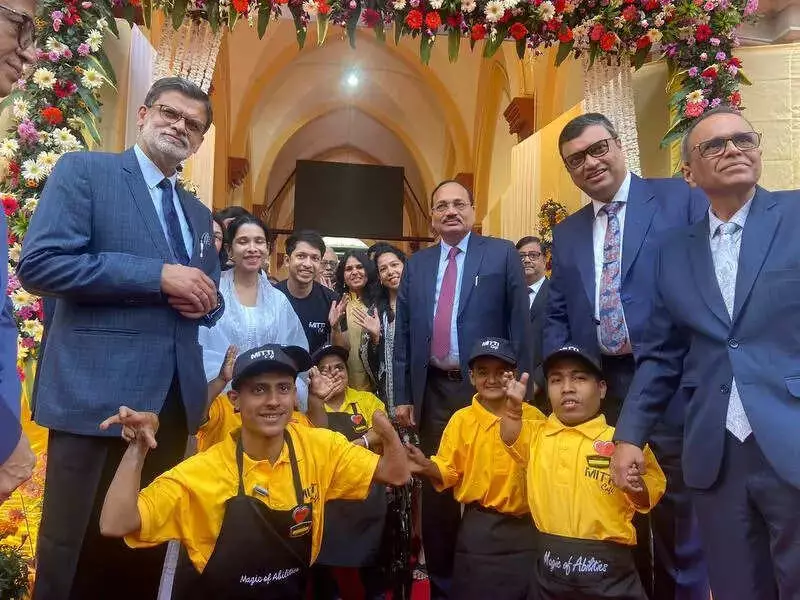
Mitti Cafe Brings Employment Hope to Disabled at Calcutta High Court
Prabhat Kumar Gupta, a 50-year-old man with locomotor disabilities, knows the struggle firsthand. The Constitution promises equal opportunity for all, but Gupta has found this right often remains distant for people like him. Now, a new initiative at the Calcutta High Court aims to change that reality.
A Cafe with a Purpose
The opening of Mitti Cafe inside the Calcutta High Court marks a significant step toward inclusion. Located near the E-gate entrance, this cafe operates with staff who have various disabilities. Gupta hopes this visibility will reach the thousands seeking justice at India's oldest high court.
Founder Alina Alam, 32, shared how the idea came to life. After successful launches at the Supreme Court and Gujarat High Court, discussions with Calcutta High Court Chief Justice Sujoy Paul led to this Kolkata location. Justice Paul strongly believes in inclusion and dignity for everyone.

"His immediate response was enthusiastic," Alam recalled. "He said we should definitely have a cafe like this here—one that generates livelihoods and creates awareness for people with special needs."
Creating Meaningful Employment
The cafe plans to employ 30 permanent staff members with diverse abilities. These include people with hearing-speech disabilities, locomotor disabilities, and mental health conditions such as mild schizophrenia or clinical depression.
Alam emphasized their core belief. "We think dignity and an opportunity to prove oneself can truly change lives," she stated. The cafe operates under an NGO that works specifically with people having special needs.
For Alam, a Kolkata resident, bringing Mitti Cafe to her home state's high court holds special meaning. After establishing locations in Delhi and Gujarat, this launch feels particularly rewarding.
Support and Training
Mitti Cafe collaborates with multiple NGOs that provide training and employment support for specially abled individuals. The Hingorani Foundation, led by Supreme Court lawyers, offers additional backing for this initiative.
One staff member, aged 34, expressed his perspective clearly. "To be able to work is my constitutional right," he asserted. Previously employed at a private company, he pursued skill development to find better opportunities.
The cafe's presence in the high court complex serves multiple purposes. It provides jobs, raises awareness about disability inclusion, and demonstrates practical support for constitutional rights. For many like Gupta, this represents more than just a cafe—it symbolizes hope and tangible progress toward equality.