In a bid to address the rising incidents of leopard attacks in the Mumbai Metropolitan Region, a state minister has proposed an innovative solution involving corporate social responsibility (CSR) funds and private partnerships. The suggestion came during a visit to a young attack victim in hospital.
Minister's Visit Spurs Action Plan
Transport Minister and Shiv Sena MLA, Sarnaik, visited 23-year-old Anjali Tak at the civic-run KEM Hospital in Parel on Tuesday. Tak, a resident of Bhayandar, was recently attacked by a leopard inside her own home and underwent plastic surgery. It was during this visit that the minister outlined a multi-pronged strategy to mitigate the human-leopard conflict plaguing the region's suburbs.
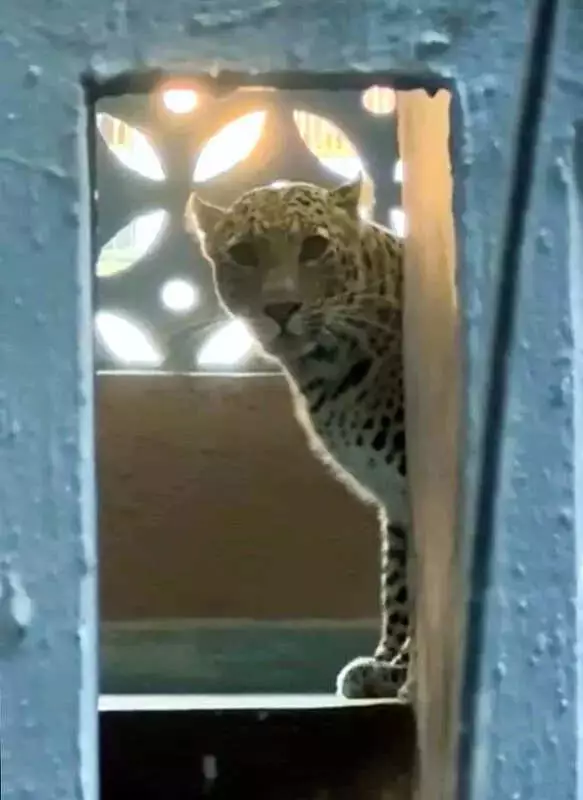
Sarnaik revealed that an estimated 55 to 60 leopards are currently present in and around the Sanjay National Park in Borivli and the Tungareshwar Wildlife Sanctuary. He pointed out that the location of these protected areas, bordering the municipal limits of Mumbai, Thane, Mira-Bhayandar, and Vasai Virar, is a primary reason for the increased frequency of dangerous encounters.

Blueprint for Coexistence: Parks, Chips, and Private Care
The minister's central proposal involves establishing compact national parks, each spanning 50 to 100 acres. These parks would be specifically designed to house the growing leopard population and would be financed through corporate social responsibility initiatives. This, he argues, would provide the big cats with dedicated territory, reducing their need to venture into human settlements in search of space or food.
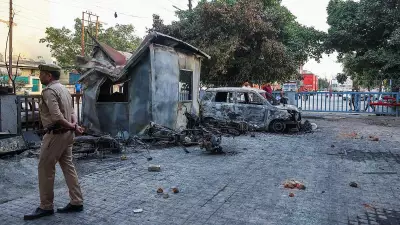
Alongside the park proposal, Sarnaik strongly advocated for fitting every leopard in the area with a tracking microchip. "Even though the entire chip process costs Rs 5 lakh per leopard, the administration shouldn't cut corners as people's safety is at stake," he asserted. The minister made these remarks while visiting the Bhayander colony last Friday, even as an eight-hour-long leopard rescue operation was underway nearby.
Engaging Private Organisations and Corporates
Looking beyond government resources, Sarnaik suggested engaging private organisations, similar to the Vantara initiative, to assist in caring for the surplus leopard population. He cited examples of successful private endeavours in countries like Australia, South Africa, and Dubai, mentioning he had personally witnessed one in Hong Kong.
With Maharashtra being home to around 2,000 leopards, the minister emphasized that sterilization alone is not a sufficient answer. He proposed a 'corporate adoption' model where companies could financially sponsor individual leopards, covering their food and care costs. Leading by example, he shared that his wife has adopted a leopard residing in the Borivali National Park, and they personally pay for its upkeep, encouraging others to follow suit.
Support for Attack Victim and Medical Outlook
Regarding Anjali Tak's case, Minister Sarnaik assured that the government would support her complete treatment. This includes future laser therapy to minimize scarring from her surgery. Doctors at KEM Hospital, including dean Dr. Sangeeta Ravat and head of the plastic surgery department Dr. Vinita Puri, informed the minister that Tak's healing process will take time. They assured him that arrangements for her subsequent laser treatments would be made.
The minister's proposals highlight a critical search for sustainable solutions as urban expansion continues to encroach on wildlife habitats, forcing a difficult and often dangerous coexistence between humans and leopards in one of India's most densely populated regions.